


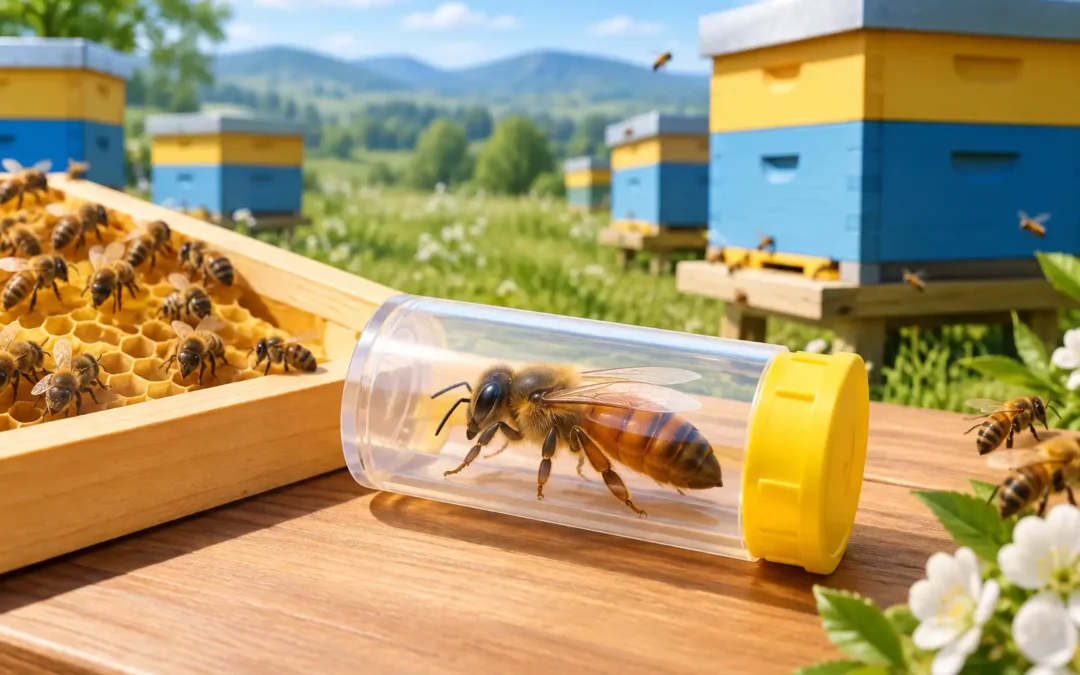
A queen can look excellent in a mating nucleus and still prove unsuitable for a working apiary. Carniolan production queens are selected with a different standard in mind: how their colonies perform through real forage conditions, brood cycles, honey flows, disease pressure, and winter. For beekeepers building stable, productive colonies, that distinction matters.
At MS Carnica Queens, our selection work begins in the Slovenian countryside, where authentic Apis mellifera carnica has long been part of the local beekeeping heritage. We evaluate colonies in practical organic production conditions, not only by pedigree or a single favorable inspection. The goal is simple: queens whose daughters give beekeepers colonies they can manage with confidence season after season.
What Makes a Queen a Production Queen?
A production queen is not merely a queen intended for sale. The term refers to the purpose of the selection behind her. Breeder colonies are assessed for traits that matter in day-to-day beekeeping: calm behavior on the comb, spring buildup, brood quality, honey production potential, hygienic behavior, wintering ability, and overall colony vitality.
These traits must work together. Very rapid spring growth may be useful where an early nectar flow is reliable, but it can become a disadvantage if colonies consume stores too quickly during a long, cold spring. A highly defensive colony may protect its entrance well, yet it makes routine inspections harder and is less suitable near homes, public areas, or closely managed apiaries. Good breeding is therefore a matter of balance, not chasing one impressive trait.
A naturally mated Carniolan queen also reflects the local drone population and the conditions in which she was raised. This produces living genetics rather than a laboratory promise. Outcomes will still vary among apiaries, because weather, forage, colony management, and mite control all influence performance. Careful selection improves the starting point. It does not remove the beekeeper’s responsibility to manage each colony well.
Why Carniolan Production Queens Suit Many Apiaries
Carniolan bees are valued across Europe for their generally calm temperament, efficient use of winter stores, and strong response when spring conditions improve. These are useful qualities for hobbyists who want pleasant inspections and for professional operations that need colonies to be handled repeatedly without unnecessary disruption.
Their spring development is especially important. A colony that builds in step with local pollen and nectar availability can be ready for fruit bloom, rape, acacia, clover, or other regional flows. Yet timing is everything. In colder or more changeable areas, the beekeeper should make sure space and feed are available when expansion begins. Strong queens need enough food and room to show their potential.
Carniolan colonies are also often appreciated for their orderly behavior on the comb. This makes it easier to assess brood, find a queen when necessary, and complete work efficiently. Temperament, however, is influenced by the queen’s genetics, the colony’s age structure, weather, forage shortages, and handling. Even well-bred bees can become unsettled during a dearth or before a storm.
Selection Must Be Based on Colony Records
Reliable queen breeding requires more than choosing colonies that appear strong in one month. A colony may look impressive in spring because it received extra feed, started with a larger population, or benefited from a better micro-location. For this reason, systematic records are central to meaningful breeder selection.
During the season, a breeder evaluates the colony repeatedly. Brood pattern, population growth, gentleness, swarming tendency, health observations, food use, and harvest potential all add to the picture. Winter adds another essential test. Colonies that enter winter well but emerge weak, hungry, or disease-stressed should not be treated as proven breeding material.
Hygienic behavior deserves particular attention. Bees that detect and remove compromised brood can support colony health and are an important part of responsible breeding. It is not a substitute for monitoring or varroa management, and no queen can make a colony automatically disease-free. Still, selecting for hygiene helps build bees with useful natural resilience.
Organic beekeeping strengthens this long-term view. It asks the beekeeper to work with the colony’s biology, local conditions, and preventive care rather than relying on shortcuts. Queen selection, adequate forage, clean comb management, timely inspections, and thoughtful winter preparation all belong to the same approach.
Choosing the Right Carniolan Queen for Your Goal
Before ordering a queen, consider what your apiary actually needs. Replacing an aging queen in a gentle, productive colony is different from rebuilding after losses or establishing a new production yard. A queen is one part of the colony system, and she should be matched to a realistic plan.
If your priority is honey production, focus on colonies with good brood development before your main flow and enough space to avoid congestion. If you produce nucleus colonies or queens, gentle handling, brood continuity, and reliable mating performance may carry greater weight. For organic operations, traceability and confidence in the breeder’s methods are equally important.
Ask whether the queen has been raised and selected under conditions comparable to yours. Slovenia’s varied landscapes, cool nights, spring changes, and diverse forage create useful selection pressure for hardy Carniolan stock. Still, a queen moved to another region needs time to settle, and the colony around her must be managed according to its new environment.
Introducing a Production Queen Carefully
Even an excellent queen can be lost through a rushed introduction. The receiving colony must be genuinely queenless, with no virgin queen, queen cells, or unnoticed laying queen present. Check carefully, because acceptance problems often begin with an incomplete inspection rather than with the shipped queen.
Allow the colony time to recognize its queenless state, then introduce the caged queen according to the method appropriate for the colony’s strength and temperament. Avoid releasing her immediately unless you have confirmed acceptance. After release, give the colony enough time to settle before repeated disturbance. A quick check for eggs after roughly one to two weeks is usually more useful than opening the hive every day.
New queens also need a colony with sufficient young bees, food reserves, and brood space. Introducing a quality queen into a weak, starving, mite-burdened colony does not create a strong production unit. First correct the conditions that are limiting the colony, then give the queen the opportunity to establish a consistent brood nest.
Production Results Begin After Delivery
The real measure of a queen is seen in her daughters and in the colony’s performance over time. Keep records after introduction: the date, acceptance, brood pattern, temperament, spring growth, honey yield, health observations, and winter outcome. These notes help you identify which queen lines truly suit your forage, climate, and management style.
Avoid judging too early. A newly introduced queen may need several brood cycles before most of the worker population reflects her genetics. A colony’s first weeks can also be shaped by the condition of the bees already present. Patience produces better decisions than replacing queens after one unsettled inspection.
Well-selected Carniolan production queens offer a sound foundation, not a guarantee detached from management. When authentic genetics are paired with attentive colony care, adequate nutrition, responsible varroa control, and honest recordkeeping, they can support calm, vital colonies that belong in a sustainable apiary. The most rewarding result is not simply a strong hive in spring, but a colony you are pleased to evaluate again when the next season begins.