


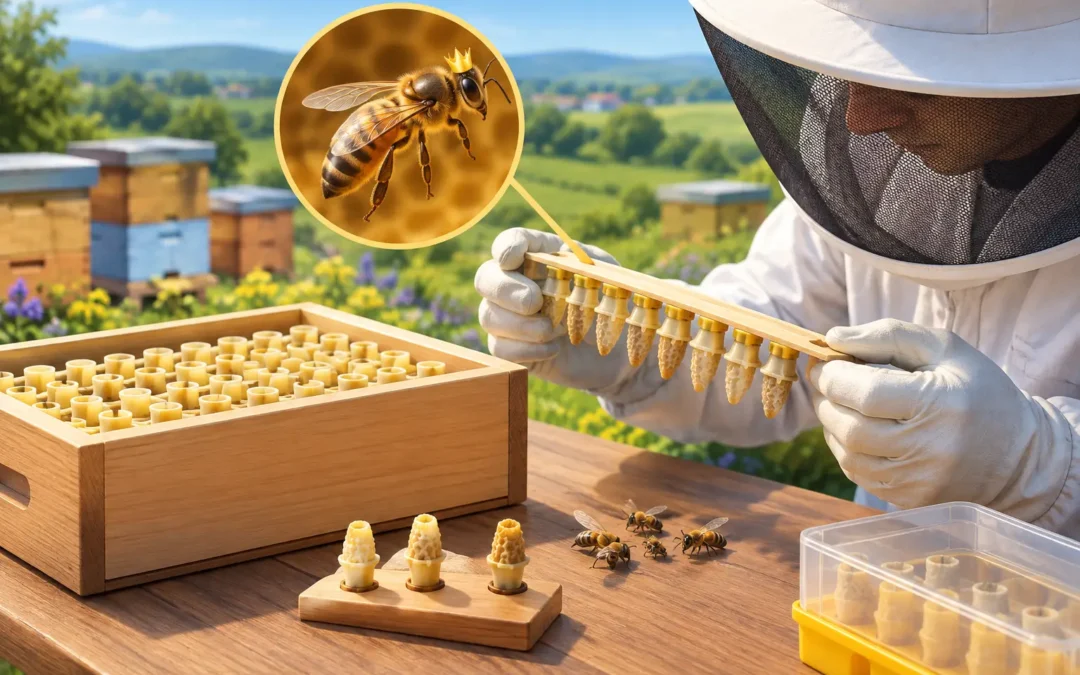
A useful queen breeder review should look beyond a queen arriving alive in a cage. The real question is whether her genetics, rearing conditions, and documented selection can support a healthy colony through spring buildup, honey flow, disease pressure, and winter. For beekeepers investing in Carniolan queens, this matters far more than a low initial price.
A queen is not a finished result. She is the starting point for a colony that must perform in your climate and management system. Good breeders are open about how they select colonies, what they measure, and what customers can realistically expect after introduction.
What a Queen Breeder Review Should Examine
The most reliable reviews combine the breeder’s information with practical beekeeping evidence. A brief comment that a queen was accepted quickly is encouraging, but it does not show how her colony performed over a full season. Look for signs that the breeder evaluates colonies under real production conditions rather than selecting only for appearance or short-term brood patterns.
A responsible breeding program considers several traits together. Calm behavior makes inspections safer and more enjoyable. Strong spring development can help a colony use early nectar flows, but it should be balanced with sensible food use and swarm control. Honey production, hygienic behavior, brood quality, vitality, and wintering ability all contribute to the value of a queen.
No single trait guarantees success. A very fast-building colony may require closer swarm management. A queen that performs well in a mild region may need a different assessment in a cold, long winter area. Honest breeders explain these trade-offs rather than promising that one queen line will solve every apiary problem.
Traceable origin and authentic stock
For Carniolan queens, origin matters. Apis mellifera carnica is closely tied to the beekeeping heritage of Slovenia and the wider Alpine region. Its well-known qualities include gentle behavior, efficient overwintering, and strong adaptation to changing nectar conditions. Yet the name alone does not confirm the quality or authenticity of the queen being offered.
Ask whether queens come from identified breeder colonies and whether the breeder records colony performance over more than one season. Transparent producers can explain their selection process, the origin of their breeding material, and how mating is managed. Naturally mated queens should be described clearly, including the practical limits of mating control in an open environment.
At MS Carnica Queens, breeder colonies are assessed in working apiaries, where colonies must meet the same seasonal demands as productive colonies. This approach keeps selection connected to practical beekeeping rather than theoretical traits alone.
Health and organic standards
A queen breeder review should also consider the health management behind the queen. Strong genetics cannot compensate for careless colony care, poor nutrition, or inadequate varroa management. Ask how colonies are monitored, how hygiene is evaluated, and whether replacement comb, feeding, and treatments follow a clear, documented system.
Certified organic production adds another level of accountability. It does not mean a colony never requires intervention. It means management follows defined standards, inputs are controlled, and production is subject to certification requirements. For organic beekeepers, buying from a breeder who understands this framework can make it easier to maintain consistency across the apiary.
Organic certification should be current and specific. It is reasonable to ask what is certified: queen production, colonies, honey, or other bee products. Clear answers are a good sign. Vague claims about being “natural” or “chemical-free” without documentation deserve closer examination.
Reading Customer Feedback With Care
Customer feedback is valuable, but beekeeping results need context. A queen introduced into a weak colony late in the season cannot be judged by the same standard as one placed into a well-prepared nucleus during favorable weather. Shipping delays, a shortage of young workers, poor feeding, or a failing queen cell can all influence acceptance and early brood development.
The most helpful feedback mentions timing, colony condition, region, and results after several brood cycles. Look for comments on laying pattern, temperament during inspections, buildup, overwintering, and communication with the breeder. Repeat customers are particularly meaningful because they suggest confidence built over more than one purchase.
Be cautious with both extremes. A review claiming immediate extraordinary honey production may say more about a strong nectar flow than genetics. Equally, one difficult introduction does not automatically indicate poor queen quality. The fairest assessment comes from a pattern of results across colonies and seasons.
Questions worth asking before ordering
Before placing an order, ask when queens are available and at what stage they are supplied. A newly mated queen, a proven laying queen, and a queen in a nucleus colony each involve different timing, cost, and management considerations. Clarify how queens are marked, how they are transported, and what support is available if a shipment is delayed.
It is also useful to ask how the breeder recommends preparing the receiving colony. Good introduction advice usually focuses on queenlessness, the presence of young bees, adequate food stores, and patience. Rushing an introduction is one of the most common reasons a good queen is lost.
For cross-border orders within Europe, confirm the required health documentation, delivery period, and seasonal limitations before purchasing. Bees should not be treated like ordinary parcels. Weather, local regulations, and colony welfare must guide dispatch decisions.
The Result That Matters: Colonies Over Winter
A queen’s first laying pattern is easy to inspect. Her colony’s condition after winter is the more revealing test. A well-selected queen should build a balanced colony that stores enough food, maintains a workable temperament, and resumes brood rearing with purpose when spring conditions allow.
Wintering results depend on forage, varroa control, colony age, local weather, and beekeeper management. Still, breeders who routinely evaluate winter survival and spring strength are selecting for traits that matter in northern and central European conditions. These records are more meaningful than broad claims of “hardy” or “productive” stock.
For a beekeeper, the best review process is practical: keep notes. Record the queen’s introduction date, brood pattern, colony temperament, feeding needs, disease observations, honey crop, swarm tendency, and spring condition. After two seasons, your own apiary records will tell you whether a breeder’s genetics suit your location and management style.
A good queen breeder earns trust gradually, through clear information, careful seasonal work, and colonies that remain dependable when the weather turns. Choose a breeder whose standards you can understand, then give the queen a properly prepared colony and enough time to show what she can do.