


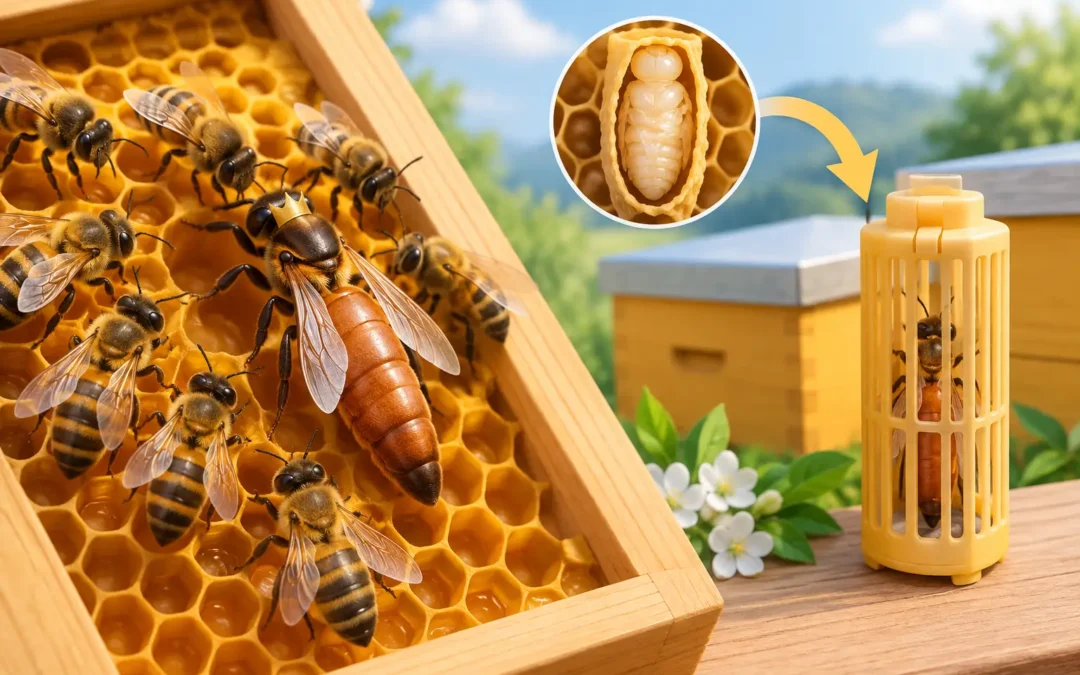
A queen bee lifespan can reach several years, but a queen’s useful working life in a productive colony is often much shorter. For beekeepers, the practical question is not simply how long she can survive. It is whether she continues to build a balanced, healthy colony that winters well, raises sound brood, and makes good use of the honey flow.
A strong queen is the center of colony continuity. Her pheromones help organize colony behavior, while her egg-laying pattern determines the workforce available for spring development, nectar collection, and winter preparation. That is why queen age should be assessed alongside brood quality, colony temperament, disease pressure, and local forage conditions.
How Long Does a Queen Bee Live?
Under favorable conditions, a queen may live three to five years. Exceptional queens occasionally live longer, especially where colonies are not heavily managed and are able to replace failing queens naturally. In everyday beekeeping, however, many queens are replaced after one or two seasons because their performance begins to decline before their biological lifespan ends.
A queen is mated early in life and stores sperm in her spermatheca. She uses that stored sperm for the rest of her life. As the supply declines or loses viability, the queen may lay more unfertilized eggs. These develop into drones rather than workers. A patchy brood pattern can result, although brood disease, chilling, nutrition, and comb condition must also be ruled out before blaming the queen.
The difference between survival and productivity matters. A three-year-old queen may still be alive, but she may no longer provide the steady worker population needed for a reliable production colony. Conversely, a well-mated queen in her second season can remain excellent if her brood pattern is compact, her colony is calm, and it comes through winter with good vitality.
Queen Bee Lifespan in a Working Apiary
In a commercial or sideline apiary, annual or two-year requeening is often part of risk management. It reduces the chance of losing a colony at the wrong moment, such as before the main nectar flow or during late-summer preparation for winter. Yet a fixed calendar should never replace inspection.
Young queens generally offer the strongest and most consistent egg laying. They also tend to maintain a more coherent colony signal, which can support orderly behavior and reduce the likelihood of emergency queen replacement. Still, requeening every colony every year may not be necessary when colonies are carefully evaluated and queens are selected from proven stock.
For Carniolan honey bees, spring development is one of the traits beekeepers value most. A good Carniolan queen can build quickly when pollen and nectar become available, allowing the colony to use an early flow without excessive feeding or unnecessary disturbance. That strength needs balance. Breeding decisions should favor queens that develop in step with local conditions, rather than colonies that expand too early and consume their stores before spring is secure.
At MS Carnica Queens, breeder colonies are assessed under real production conditions. Age is considered, but it is only one part of the picture. Calm behavior on the comb, brood quality, honey potential, hygienic behavior, wintering ability, and overall colony vitality give a more meaningful view of a queen’s value.
Signs That a Queen May Be Declining
A queen does not always fail suddenly. More often, the colony gives gradual signals. The most useful sign is a brood nest that no longer matches the season or the colony’s available resources. During a period when a healthy colony should be expanding, a weak or irregular brood pattern deserves attention.
Look for scattered worker brood, a noticeable number of drone cells within the worker brood area, or a colony population that falls behind neighboring colonies with similar forage and management. A reduced laying area can also be a concern, although weather, a nectar dearth, varroa pressure, and lack of pollen may all limit brood rearing.
Behavior can provide another clue. Colonies sometimes become more defensive or restless when queen pheromone is weak. This is not a diagnosis on its own. Poor weather, queenlessness, robbing pressure, and disease can change colony behavior as well. But when temperament changes are combined with poor brood and slow growth, the queen should be inspected closely.
Supersedure cells are often the colony’s own assessment of queen quality. Bees may replace an aging queen while she is still present and laying. When a strong colony raises a well-positioned supersedure cell, allowing the process to proceed can be sensible. The trade-off is that natural replacement may create a temporary brood break and the mating result cannot be controlled as closely as when introducing a selected queen.
When Requeening Makes Sense
The best time to requeen depends on climate, colony condition, and the purpose of the hive. In many temperate areas, late spring and summer offer favorable conditions because worker populations are strong and drones are available. A purchased, naturally mated queen can also be introduced when a failing queen is found during the active season, provided the colony is prepared properly.
Requeening is especially worth considering when a colony has persistently poor brood quality, undesirable defensiveness, repeated weak wintering, or a queen older than two seasons whose performance is clearly slipping. It is also useful after a colony has gone queenless and begun laying workers, although such colonies may need more careful intervention to accept a replacement queen.
Before introducing a new queen, confirm that the old queen has been removed and that there are no emergency queen cells. Give the colony time to recognize its queenless condition, then follow a careful introduction method. Acceptance is usually better when the colony is not stressed by starvation, robbing, overheating, or heavy disturbance.
Genetics, Mating, and Queen Longevity
Queen lifespan is influenced by more than calendar age. Good nutrition during queen rearing, sound mating conditions, sufficient drone quality, and gentle handling all affect her start in life. A queen that mates well can maintain a productive laying pattern longer than one with inadequate sperm stores.
Genetics also shape the way a colony uses a queen’s potential. Selection for vitality, hygienic behavior, calm temperament, and wintering ability does not guarantee that every queen will perform identically in every location. Weather, forage, varroa management, and beekeeper decisions remain important. But selected genetics give a colony a stronger foundation.
For organic-minded beekeepers, this is particularly relevant. Sustainable beekeeping relies on observation and timely action rather than treating every problem as a product problem. Requeening with healthy, traceable stock can help maintain manageable colonies, while good nutrition, appropriate hive space, and careful varroa control protect the queen’s workforce.
Keep Records Before You Replace Her
A simple queen record turns a vague impression into a better decision. Note the queen’s age or marking color, brood pattern, temperament, spring buildup, honey production, health observations, and winter outcome. Over several seasons, these notes reveal which queen lines truly suit your apiary and which colonies only appeared strong for a short period.
Do not replace a queen solely because she has reached a certain birthday. A proven queen that heads a calm, productive colony with solid brood and good winter stores may deserve another season. At the same time, do not keep an aging queen out of sentiment when the colony is clearly losing momentum. Thoughtful requeening protects both the colony and the next season’s possibilities.