'/%3E%3C/svg%3E)


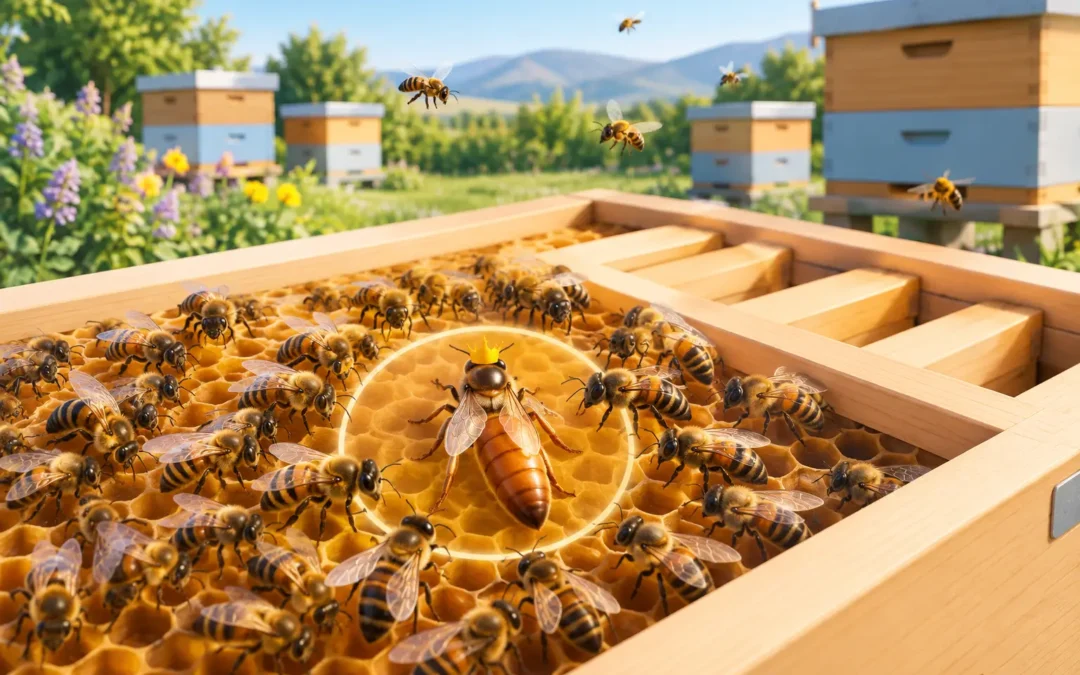
For Carniolan bees, naturally mated queens remain a practical and valuable choice. They are mated under normal flight conditions, begin laying in a working colony, and can be evaluated where it matters most: in the apiary. Reliability comes from the quality of selection before mating and the inspection after it, not from a label alone.
What Natural Mating Can and Cannot Control
A naturally mated queen flies to drone congregation areas and mates with several drones. This supports genetic diversity within her worker population, which can contribute to colony vitality and resilience. It also reflects the natural reproductive behavior of Apis mellifera carnica, the Carniolan honey bee shaped by the changing seasons and diverse landscapes of Slovenia.
Natural mating does not provide the same level of paternal control as instrumental insemination. A breeder cannot identify every drone that contributes to the queen’s offspring. Weather, drone availability, nearby colonies, and the location of mating areas all influence the result. This is the trade-off: natural mating offers real-world selection and genetic diversity, but it requires responsible management of the wider mating environment.
Reliability Begins With the Breeder Colony
The mother colony has the greatest visible influence on a queen breeder’s work. A queen should be raised from a colony that has proved itself over more than a single good week of nectar flow. Calm behavior, healthy brood, spring development, honey production potential, hygienic behavior, wintering ability, and colony vitality all deserve attention.
At MS Carnica Queens, breeder colonies are assessed under practical production conditions. This matters because a queen intended for another beekeeper’s apiary should not be selected only for appearance or pedigree. She should come from a colony that has handled a real season, including variable weather, brood rearing, forage changes, and winter preparation.
The Drone Side Still Matters
A naturally mated queen is only as predictable as the drone population around her allows. Responsible queen producers place mating nuclei where selected Carniolan stock is well represented and where the risk of unwanted outside influence is reduced as far as practical. In regions with established local Carniolan populations, this can provide a strong foundation for naturally mated queens.
No honest breeder should promise absolute genetic uniformity from open mating. What can be offered is a carefully planned mating process, selected maternal lines, healthy drones, appropriate mating locations, and transparent evaluation. For many beekeepers, that combination is more meaningful than an unrealistic claim of complete control.
How to Judge Whether a Naturally Mated Queen Is Reliable
The first useful sign is a consistent brood pattern after the queen has settled and begun laying. A solid pattern is not perfectly wall-to-wall brood on every frame. Seasonal conditions, available forage, colony size, and the age of the queen all affect brood nest appearance. However, a reliable young queen should establish a compact, even brood area with relatively few unexplained gaps.
The colony’s temperament is another practical measure. Carniolan bees are valued for their generally calm handling, but behavior is influenced by weather, nectar flow, colony condition, and management. Assess temperament over several inspections, not during one cold, stormy, or dearth-period visit. A calm colony that remains workable without excessive defensive behavior is a better indication than a single observation.
Look beyond the queen herself. A reliable queen produces workers that help the colony build at the right pace, maintain brood health, and prepare adequately for winter. Fast spring development is valuable in Carniolan stock, yet it should be balanced by good management. A rapidly growing colony needs sufficient room, timely swarm control, and adequate food stores. Queen quality and beekeeper management work together.
Are Naturally Mated Queens Reliable for Organic Beekeeping?
They can be an excellent fit for organic beekeeping because natural mating respects the normal biology of the honey bee and allows queens to begin their work in ordinary colony conditions. Still, organic certification alone does not make a queen genetically superior. The reliability of a queen depends on selection, colony health practices, traceability, and the care given throughout rearing and transport.
For organic-minded beekeepers, it is sensible to ask how breeder colonies are selected, how queens are raised, whether the apiary follows certified organic standards, and how young queens are checked before dispatch. Clear answers are more valuable than broad marketing language. Traceable production gives buyers a better understanding of what they are bringing into their own apiaries.
A naturally mated queen is also well suited to operations that value adaptation over excessive standardization. Colonies must respond to local forage, weather patterns, and winter length. A queen from a carefully selected Slovenian Carniolan program brings genetics shaped by an environment where spring can arrive slowly, honey flows can be intense, and successful wintering remains essential.
When Another Option May Be Better
Naturally mated queens are not the best answer for every breeding goal. If a commercial breeder needs tightly controlled parentage for advanced line development, instrumental insemination may be the better tool. It allows specific drone lines to be paired with a chosen queen and makes detailed genetic comparisons easier.
That does not make naturally mated queens a lesser option for working apiaries. Most beekeepers are looking for queens that lay well, build sensible colonies, handle calmly, winter successfully, and produce healthy workers. For that purpose, a properly selected and inspected naturally mated queen is often a dependable, practical choice.
Questions Worth Asking Before You Buy
Before ordering, ask whether the queen has been checked for a satisfactory laying pattern and whether her mother colony was evaluated across a full season. Ask about the mating area, the health status of the apiary, and the producer’s approach to traceability. These questions help distinguish a queen raised with a long-term breeding purpose from one sold with little information behind her.
It is also wise to consider timing. Even a well-bred queen needs a sensible introduction, enough young bees, adequate food, and suitable weather to establish properly. A colony struggling with disease, starvation, laying workers, or poor acceptance may fail regardless of the queen’s quality. Evaluating the receiving colony is part of buying queens responsibly.
Natural mating is reliable when it is supported by disciplined selection, thoughtful mating-site management, and honest colony evaluation. A good Carniolan queen should not be judged only by the day she arrives, but by the quiet, healthy, productive colony she helps build through the season and into the next spring.