


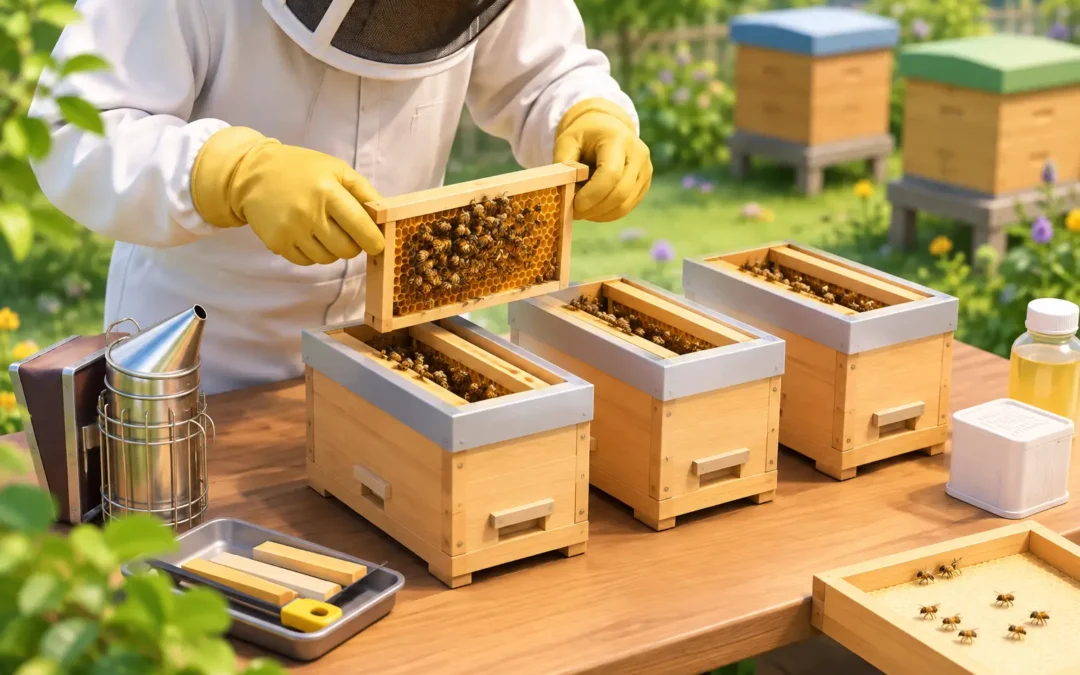
A well-made nucleus colony is more than a small box of bees. It is a balanced working unit with enough young bees, brood, food, and queen power to continue developing after it leaves the parent apiary. Knowing how to prepare nucleus colonies carefully protects both the new colony and the production colony that supplies it.
For Carniolan bees, timing and balance are especially important. Their strong spring development is valuable, but a nucleus that is made too early, given too little support, or left short of food can lose that advantage quickly.
Start with strong, healthy breeder colonies
Nucleus colonies should be made only from colonies that have earned your confidence through regular observation. Select donor colonies with a calm temperament, solid brood patterns, good honey production potential, hygienic behavior, and dependable wintering results. These are practical traits that help a new colony become productive rather than merely survive.
Do not weaken a colony that is still building strength after winter. A donor colony should have enough adult bees, sealed brood, open brood, food stores, and room to recover without losing its own momentum. In most apiaries, the best time is when colonies are expanding strongly, drones are mature, and stable weather allows mating flights.
Organic management begins with prevention. Avoid moving frames from colonies with questionable brood patterns, visible disease signs, repeated queen problems, or excessive varroa pressure. A nucleus can only be as healthy as the colony from which it is formed.
Build a balanced nucleus colony
A practical five-frame nucleus usually needs three frames of brood, one frame of honey and pollen, and one drawn comb or foundation frame. The exact arrangement depends on weather, forage, the strength of the bees, and whether the colony receives a mated queen or must raise a queen itself.
Brood frames should include mostly capped brood, together with some open brood and eggs when appropriate. Capped brood provides a quick supply of emerging workers. Open brood helps keep nurse bees settled in the new box and gives the colony a normal working rhythm. Choose frames with compact brood patterns and no signs of brood disease.
Shake or brush enough young bees into the nucleus to cover the brood well. Nurse bees are less likely to return to the original hive than older foragers, and they are essential for warming brood and feeding larvae. If the nuc remains in the same apiary, add extra young bees because many flying bees will return to their original colony.
The food frame must contain both honey and pollen whenever possible. Honey provides immediate energy, while pollen supports brood rearing. A nucleus with brood but inadequate pollen may look strong on the first day and then slow down when its nurse bees cannot feed developing larvae properly.
Give the nucleus a good queen
The queen determines much of the colony’s future behavior, development, and productivity. A newly mated Carniolan queen from selected stock allows the nucleus to establish more quickly than a queenless unit that must raise and mate its own queen.
Before introducing a queen, make sure the nucleus is truly queenless. Check the frames carefully, especially when they come from more than one donor colony. A missed queen can lead to rejection of the introduced queen or an unexpected split in the new colony.
Introduce the queen in a cage between brood frames, where the bees can attend her. Leave the candy plug in place so acceptance happens gradually. After several days, inspect quietly for queen release and fresh eggs. Avoid repeated disturbance during the first week. A young colony needs stable conditions more than frequent inspections.
If you are preparing mating nuclei rather than sale nuclei, their requirements are different. They can be smaller, but they still need enough young bees, food, ventilation, and protection from drifting. Their purpose is to support a virgin queen through mating and early egg laying, not to build immediately into a production colony.
Position frames and protect the brood nest
Place brood frames together in the center of the box. Keep food frames beside the brood, particularly on the side exposed to prevailing wind or cooler conditions. If using foundation, place it at the outer edge rather than splitting the brood nest with it.
Reduce the entrance according to colony strength. A small entrance helps a young nucleus defend itself against robbing and wasps, especially during a nectar dearth. At the same time, the box must have adequate ventilation. Overheating during transport or on warm spring days can damage brood and stress the queen.
Use a sound, clean nucleus box with a close-fitting lid. Damp equipment, cracked boxes, or poor ventilation create avoidable problems. In the Slovenian countryside, spring weather can change quickly, and the same is true in many European and North American beekeeping regions. A nucleus should be protected from cold nights, rain, and direct afternoon heat.
Feed according to forage conditions
A new nucleus does not always need syrup, but it should never be allowed to run short while it is establishing. If nectar is coming in steadily and the food frame is well supplied, feeding may be unnecessary. If weather is unsettled, forage is limited, or the nucleus contains several frames of open brood, small regular feedings can prevent a damaging interruption in development.
Feed inside the box or use a feeder that does not encourage robbing. Avoid spilling syrup around the entrance. In certified organic beekeeping, feeding choices and timing must follow the applicable certification rules, so keep clear records and use only permitted materials.
Pollen availability deserves equal attention. Syrup cannot replace natural pollen. Where pollen is scarce, avoid making too many nuclei at once, because every new colony depends on nurse bees that must produce brood food.
Move, mark, and monitor the new colony
When possible, move newly made nuclei to another yard beyond the normal flight range of the donor apiary. This reduces the loss of foragers returning to their original hive. If moving is not practical, keep the entrance reduced and provide extra young bees at creation.
Mark each nucleus with the queen year, queen lineage or breeder record, creation date, and treatment or feeding notes. Traceability is useful for every beekeeper, but it is particularly valuable when selecting future breeder colonies. Good records show which queen lines develop steadily, winter well, remain calm, and maintain healthy brood.
Inspect after about one week to confirm that the queen is laying and that the bees are covering the brood. Then inspect only as needed. Watch for a shrinking bee population, poor brood pattern, lack of stores, queen cells, robbing, or signs of disease. Early correction is often simple. Waiting until the nucleus is weak makes recovery slower and less certain.
Avoid the most common mistakes
The most frequent problem is making too many nuclei from colonies that are not truly ready. A strong donor hive can recover from a sensible division, but repeated removal of brood and bees may reduce its honey crop and increase its swarming pressure if space is not managed well.
Another mistake is relying on a queen alone to solve an unbalanced unit. Even excellent genetics cannot compensate for chilled brood, insufficient nurse bees, empty food frames, or a poor mating period. A quality queen needs a colony capable of supporting her.
Patience after setup also matters. Give the bees time to organize around their queen and brood. A carefully prepared nucleus, built from healthy selected stock and managed with attention to food and weather, is one of the most reliable ways to renew an apiary while preserving the character of good Carniolan bees.
The best nuclei are not the ones made fastest. They are the ones that leave the apiary with enough strength, food, and proven genetics to meet the next season with purpose.