


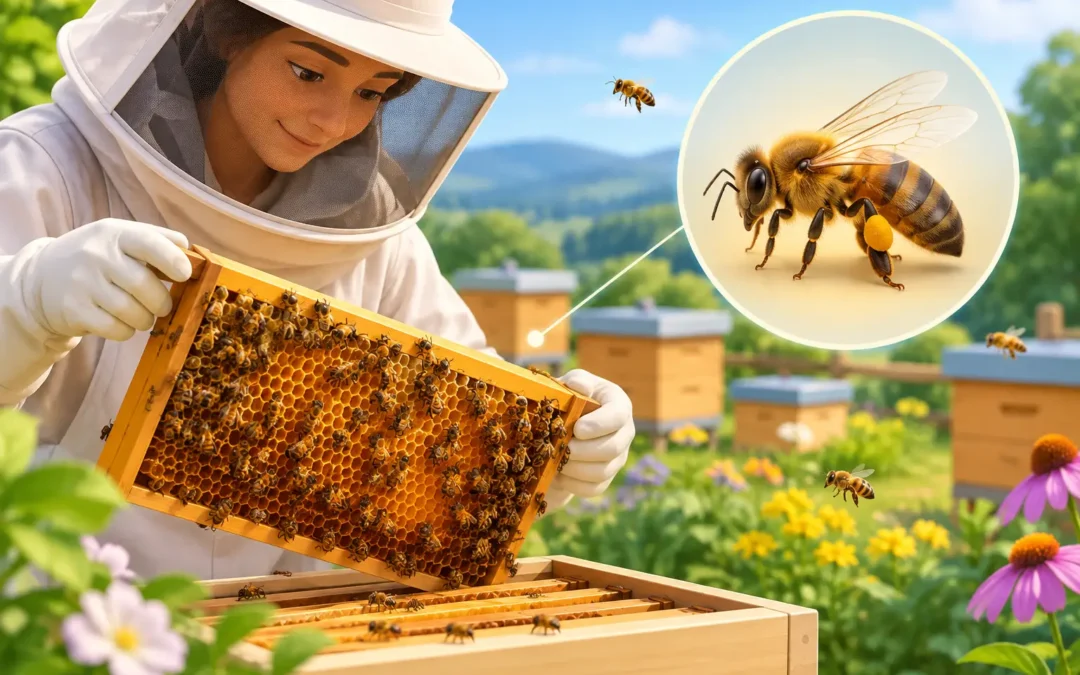
A calm honey bee breed can change the character of an apiary. Inspections become more deliberate, neighbors are less likely to be disturbed, and the beekeeper can spend more attention on brood pattern, stores, and colony health instead of working around defensive bees. But calmness is not a trait that can be judged from a breed name alone. It comes from queen genetics, selection standards, mating conditions, colony management, and the environment in which bees are kept.
For beekeepers seeking reliable, workable colonies, the Carniolan honey bee, Apis mellifera carnica, is often a serious choice. Native to Slovenia and neighboring regions, this bee has a long reputation for gentle handling, strong spring development, and good adaptation to changing seasons. Those qualities explain its popularity, but they also deserve a practical look.
What Makes a Honey Bee Colony Calm?
A calm colony does not mean a colony that never responds to disturbance. Healthy honey bees will protect their nest when they feel threatened. The useful difference is how quickly and how intensely they respond during normal beekeeping work.
In a well-tempered colony, bees usually remain on the comb while frames are lifted. They are less likely to rush across the top bars, follow the beekeeper after an inspection, or sting in response to gentle, properly timed handling. Such colonies still require smoke when appropriate, steady movements, and respect for weather and nectar conditions. Calm genetics improve the experience, but they do not replace sound beekeeping.
Temperament is also closely connected to colony vitality. A colony weakened by queenlessness, hunger, disease pressure, rough handling, or repeated disturbance may become unsettled regardless of its genetic background. For this reason, experienced breeders evaluate behavior repeatedly across the season rather than assigning a score after one favorable inspection.
Why Carniolan Bees Are Known for Gentle Temperament
Carniolan bees are valued by many hobby and professional beekeepers because selected lines can be notably calm on the comb. This makes them especially suitable for apiaries where colonies are inspected regularly, queens are raised, or bee yards are located near homes, gardens, and working farms.
Their gentleness is only one part of the Carniolan profile. Good Carniolan colonies are also known for responsive spring buildup, efficient use of nectar flows, solid wintering ability, and a tendency to maintain compact brood nests. In Slovenia, where weather can shift quickly between valleys, hills, and forested landscapes, these traits have practical value. Bees must use favorable flying days well while conserving stores through winter.
A fast spring buildup has a trade-off. Strong colonies need enough room at the right time and regular attention to swarm preparation. A gentle colony can still swarm if its population expands faster than the available brood and honey space. Choosing a calm honey bee breed should therefore be paired with a plan for spring inspections, timely supering, and queen management.
Breed Reputation Is Not a Guarantee
The name Carniolan does not automatically guarantee a quiet, productive colony. Within every population, individual colonies vary. Queen quality matters, as does the selection work behind her.
A responsibly bred queen comes from colonies evaluated under real apiary conditions. At MS Carnica Queens, breeder colonies are observed for calm behavior alongside spring development, honey production potential, hygienic behavior, wintering performance, and overall vitality. This broader evaluation matters because a queen should support a balanced colony, not merely a pleasant inspection.
Naturally mated queens add another variable. The queen carries selected maternal genetics, while the drones she mates with contribute significantly to the character of her daughters. In areas with a strong local Carniolan population and careful breeding practice, naturally mated queens can provide dependable results. Still, no breeder can promise that every colony will behave identically in every location.
Local forage, climate, pesticide exposure, disease pressure, and the beekeeper’s handling all influence the final result. It is better to view queen selection as a strong foundation than as a fixed guarantee.
How to Evaluate Temperament in Your Own Apiary
The most useful assessment happens during several ordinary inspections. Avoid judging a colony on a cold, wet, windy day or when there is little forage available. Even normally calm bees may be more defensive under those conditions.
Watch how the colony responds when the lid is removed and the first frames are handled. Are bees settled on the comb, or do they immediately boil upward? Do they follow you after the hive is closed? Are stings occurring despite calm movements and modest smoke? Note these observations alongside brood pattern, queen status, stores, and any health concerns.
Keeping simple colony records makes temperament easier to evaluate honestly. A short rating after each inspection can reveal whether a defensive response is temporary or consistent. It also prevents memory from being shaped by one bad day.
When a colony remains excessively defensive through suitable weather, with adequate food and no obvious disturbance, requeening is often the sensible decision. Requeening with a selected Carniolan queen can gradually change the colony’s working character as the old worker population is replaced by the new queen’s daughters.
Give a New Queen Time to Show Her Influence
A newly introduced queen does not transform a colony overnight. Existing workers retain the temperament shaped by the previous queen and the colony’s circumstances. As her brood emerges, the colony’s behavior can become clearer over several weeks.
Check that the queen is accepted and laying well before making an early judgment. A compact, even brood pattern and a steady colony mood are encouraging signs. Avoid opening the hive more often than necessary during the first period after introduction, since repeated disturbance can complicate acceptance.
Management Habits That Support Calm Colonies
Even excellent genetics can be undermined by poor timing. Inspect colonies during suitable flying weather when foragers are active. Work gently, keep frames in their original order, and avoid crushing bees between boxes or frames. Crushed bees release alarm pheromone, which can quickly change the mood of an otherwise calm hive.
Use smoke sparingly and with purpose. Cool, clean smoke can help interrupt alarm behavior; excessive smoke often makes inspections slower and more disruptive. Make sure colonies have adequate stores, particularly during spring gaps and late-season dearths. Hunger is a common and avoidable cause of defensive behavior.
Disease and parasite management also belong in the temperament discussion. Varroa pressure, viral stress, and failing queens can affect colony behavior and survival. Hygienic behavior is therefore a valuable breeding trait, but it should be supported by regular monitoring and a management plan appropriate to the apiary and local regulations.
Organic beekeeping adds a useful discipline here. It asks the beekeeper to pay close attention to location, forage, colony condition, and approved health measures rather than relying on shortcuts. Certified organic production does not make bees automatically gentler, but careful husbandry supports stable colonies and meaningful selection decisions.
Choosing the Right Queen for a Long-Term Apiary
If calmness is a priority, ask more than whether a queen is Carniolan. Ask how breeder colonies are selected, whether performance is recorded over time, and which traits are considered alongside temperament. Traceable origin and transparent production methods are especially valuable when building an apiary around consistent genetics.
For a beginner, calm bees make learning safer and more enjoyable. For an established operator, they can make routine work more efficient and reduce disturbance across a larger number of colonies. For an organic beekeeper, a well-selected queen can contribute to a colony that is easier to observe closely and manage with care.
The best choice is rarely the queen advertised with the biggest claim. It is the queen from a breeding program that measures colony performance, respects the bees’ natural cycles, and selects steadily for traits that remain useful when weather, forage, and production demands change.
A calm colony is built one season at a time. Start with carefully selected genetics, give the colony enough space and stores, observe it under normal conditions, and let your records guide the next queen decision. That patient approach is good for the beekeeper, the bees, and the people who share the landscape around the apiary.