'/%3E%3C/svg%3E)


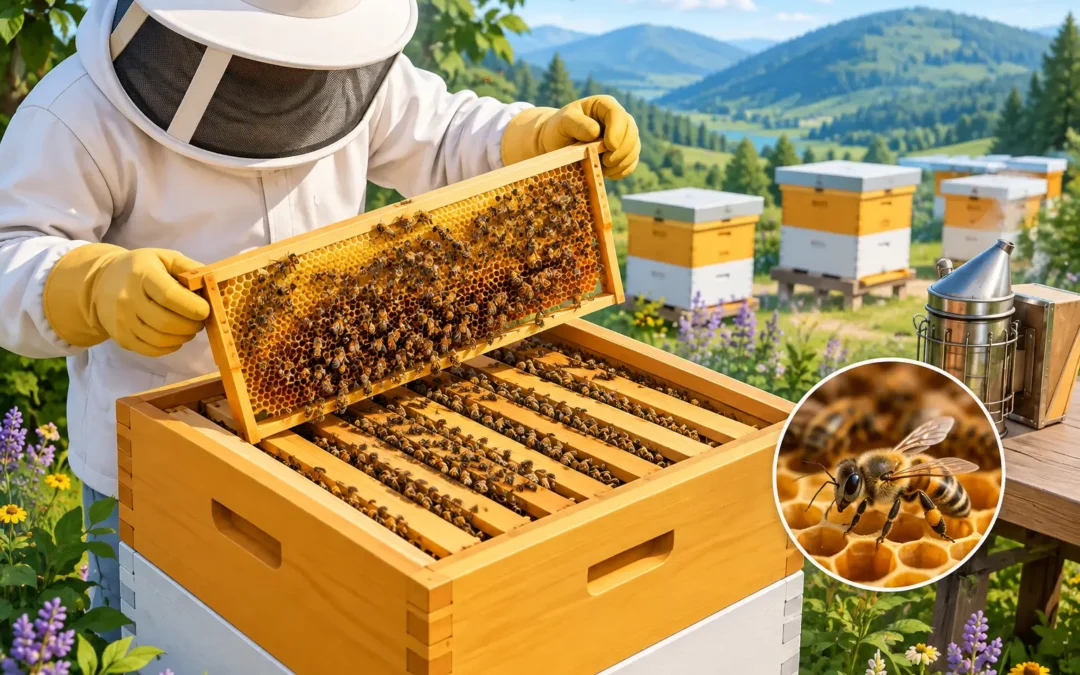
Carniolan bees developed in a region where spring weather can change quickly and forage may arrive in short, intense flows. Well-selected stock is known for calm handling, economical wintering, rapid spring development, and productive use of available nectar. Individual colonies still differ, however. Weather, local forage, queen age, disease pressure, and the beekeeper’s management all shape the result.
Read the Colony Before You Add Space
The calendar is useful, but the colony is the better guide. Start spring checks when bees are flying consistently and conditions allow a brief, careful inspection. Look for a compact brood pattern, enough food around the brood nest, a laying queen or fresh eggs, and signs that the population is increasing.
A Carniolan colony may expand brood rapidly when pollen becomes available. This is desirable only if food reserves can support it. A long cold spell after early brood rearing can leave a strong-looking colony short of stores. Lift the hive from the back, assess the combs, and provide suitable feed when necessary and permitted within your management system. In organic beekeeping, feeding choices and timing must follow the applicable certification rules.
Do not add empty boxes simply because spring has arrived. Give the colony room when the brood nest is growing and bees are beginning to occupy the available combs. Drawn comb close to the brood area is often more useful than a box of foundation placed too early. The aim is to prevent crowding without chilling brood or creating more space than the bees can protect.
Keep Brood Nest Work Gentle
During cool spring weather, avoid breaking apart the brood nest repeatedly. Quick, purposeful inspections are better than long examinations. Check whether the queen has room to lay, whether food is available, and whether the colony is starting to prepare swarm cells.
Good Carniolan queens often build a dense brood nest. A frame of emerging brood can be a valuable resource for balancing colonies, but only take it from hives that are genuinely strong and healthy. Weak colonies do not benefit from being repeatedly opened or overextended. First identify the limiting factor: queen quality, lack of food, varroa pressure, disease, or insufficient bee population.
Swarm Prevention Is a Seasonal Job
Carniolan bees are rightly valued for their spring development, yet this trait requires attentive swarm management. Swarming is not simply caused by a lack of honey supers. It is usually linked to a growing population, a congested brood area, a queen whose pheromone influence is changing, and favorable weather that allows a colony to reproduce.
Inspect rapidly expanding colonies at suitable intervals during the main swarm period. Look for queen cups, charged queen cells, reduced space for the queen, and a brood nest packed with bees. Queen cups alone are not a reason to interfere. Cells containing eggs or larvae, especially along lower comb edges, require a management decision.
Giving honey supers can help provide work and storage room, but it will not reliably stop a colony that has already committed to swarming. If swarm cells are present, use a method that fits your goals: create a controlled split, make a nucleus colony, or perform an artificial swarm. Simply removing queen cells often delays the problem and can leave the colony queenless if an important cell is missed.
For apiaries producing queens or nucleus colonies, planned splits can turn spring pressure into useful colony growth. Use brood from healthy, well-performing colonies and maintain clear records of queen origin, temperament, brood pattern, honey production, winter survival, and hygienic behavior. Breeding decisions should be based on repeated observations under real local conditions, not on one impressive inspection.
Make Varroa Monitoring Part of Every Season
A calm colony with a beautiful brood pattern can still carry damaging varroa levels. Carniolan genetics may contribute to hygienic behavior, but no bee population should be treated as automatically resistant. Regular monitoring remains essential.
Choose a consistent monitoring method and record results by colony. Alcohol or detergent washes provide a direct estimate of mites on adult bees, while other methods can help show seasonal trends. The best approach depends on local rules, beekeeper experience, and the purpose of the apiary, but guessing is not a treatment plan.
Treatment timing matters as much as product choice. The colony that appears strong in late summer may be raising the long-lived winter bees that must survive until spring. High mite pressure at this stage can shorten bee life, increase virus problems, and lead to winter losses that seem unexplained months later. Follow approved product instructions, observe withdrawal requirements, and integrate treatments with your organic certification plan where applicable.
Watch for More Than Mites
Each inspection offers a chance to notice brood irregularities, unusual odor, weak flight activity, dysentery, starvation, queenlessness, or poor population balance. Hygienic colonies may remove damaged or diseased brood efficiently, but visible hygiene should never replace proper diagnosis.
Keep equipment clean, avoid moving suspect combs between colonies, and replace old, dark comb on a sensible rotation. If you see signs of a notifiable disease, follow local veterinary and apiary authority guidance promptly. Responsible beekeeping protects neighboring apiaries as well as your own.
Manage Honey Space Around the Flow
Carniolan colonies can collect heavily when weather and forage align. Add supers before the main nectar flow, not after every available cell is crowded with nectar. Bees need enough room to process incoming nectar, and a congested hive can shift quickly toward swarm preparation.
The right number of supers depends on colony strength, comb availability, and local forage. In a short, strong flow, an extra super placed early is often better than waiting for certainty. In a weak colony or uncertain weather, excessive space may remain unused and complicate hive management.
Harvest only fully ripened honey with care for colony needs. Do not remove stores so aggressively that the bees require large amounts of replacement feed after the flow. For a family apiary committed to certified organic production, the quality of the colony and the integrity of its forage landscape matter as much as the weight of the honey crop.
Prepare Winter Bees, Not Just Winter Boxes
Late-summer management determines much of the following spring. After the main flow, assess each colony honestly: queen quality, brood pattern, food reserves, mite levels, population, and comb condition. A weak colony with a failing queen rarely becomes a dependable wintering unit through optimism alone.
Requeen colonies that are persistently defensive, poorly productive, disease-prone, or irregular in brood. A well-mated Carniolan queen can help a colony organize its late-season brood rearing and winter cluster, but she needs adequate young bees, stores, and low parasite pressure to succeed.
Combine colonies when doing so creates a viable, healthy unit. This is often kinder and more productive than trying to winter several marginal hives. Ensure the remaining colony has a suitable queen, enough food, sound comb, reduced entrances where appropriate, and protection from moisture and rodents. Good ventilation should remove excess moisture without exposing the cluster to constant drafts.
Winter checks should be quiet and limited. Observe flight on mild days, monitor hive weight, and respond to clear signs of hunger. Avoid opening the brood nest without a real reason. Carniolan bees are generally economical winterers, but they still need accessible stores when brood rearing resumes before spring forage is dependable.
Records Turn Observations Into Better Queens
The most useful Carniolan colony management is not based on one season or one hive. It comes from records that reveal which colonies overwintered well, developed at the right pace, remained calm, resisted brood problems, and produced honey without constant intervention.
At MS Carnica Queens, breeder selection is grounded in this kind of repeated colony evaluation under production conditions. For any beekeeper, even a simple notebook can improve decisions. Record inspection dates, queen age and origin, brood observations, mite counts, feeding, swarm cells, harvest, and winter outcome. Over time, these notes show which genetics and management choices fit your landscape.
A good Carniolan colony rewards close observation rather than constant disturbance. Give it room before it is crowded, food before it is hungry, and a clear wintering plan before autumn closes around the apiary. The result is not merely a stronger hive, but a steadier and more thoughtful beekeeping season.