


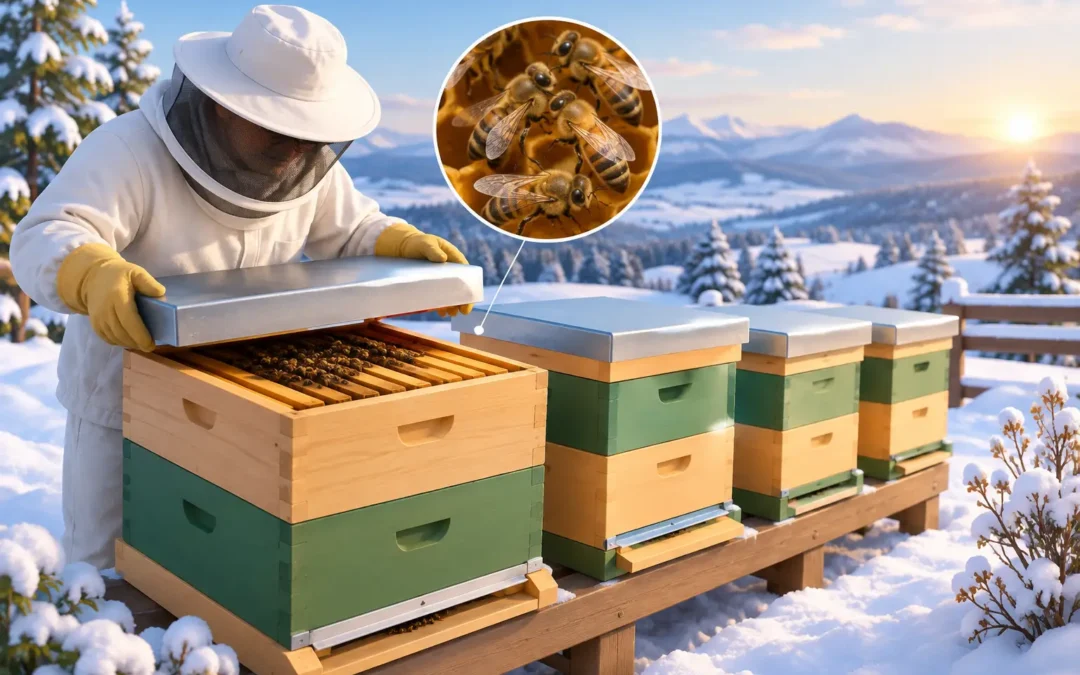
A colony that enters winter looking large can still fail before spring if it carries too much varroa, has poorly placed food, or sits in damp, exposed conditions. Knowing how to winter Carniolan colonies means working with their natural strengths while preparing carefully for the risks that cold weather exposes.
Carniolan bees are valued for calm behavior, good use of winter stores, and rapid spring development. Those qualities come from generations adapted to the changing seasons of Central Europe. Yet they are not a substitute for sound autumn management. A healthy, well-provisioned colony with a young, productive queen is the foundation of successful wintering.
Start winter preparation before cold weather arrives
Winter losses are usually decided in late summer and early fall, not during the first hard frost. As the main nectar flow ends, assess every colony honestly. A colony should have a laying queen, a solid brood pattern, enough adult bees to cover its brood, and no obvious signs of disease or severe stress.
Weak colonies are rarely helped by being left alone in a full-size hive. If two colonies are both too small to maintain a proper winter cluster, combining them while temperatures still allow the bees to settle is often the more responsible choice. Keep the better queen and use a careful, low-stress combining method. A single viable colony is more valuable in spring than two depleted ones.
Carniolan colonies can reduce brood rearing quickly when forage declines. This is useful because it helps them conserve resources, but it can also conceal a problem. Do not judge winter readiness only by the number of frames covered with bees. Look for a balanced colony with enough young, long-lived workers emerging in fall.
Give varroa control priority
Varroa management is central to winter survival. The bees that emerge in late summer and fall must live through winter and raise the first brood of spring. If they develop while heavily affected by varroa and associated viruses, a colony may appear strong in October but collapse before the first good flight days.
Monitor mite levels using a consistent method and make treatment decisions early enough to protect the winter bee generation. Use methods permitted by your local regulations and, where relevant, your organic certification standard. Timing matters as much as product choice. A late treatment may reduce mites, but it cannot fully restore the health of bees already damaged during development.
Hygienic behavior is a valuable trait in selected Carniolan breeding stock, but it should support monitoring and management, not replace them. Keep records of mite counts, treatment dates, brood condition, and winter survival. Over several seasons, these notes reveal which queens and colony lines perform reliably in your own location.
Provide enough food in the right place
Winter stores are not simply a matter of total weight. Food must be accessible to the cluster as it moves upward through the hive. Bees can starve beside sealed honey when prolonged cold prevents them from breaking cluster and reaching it.
The amount needed depends on hive size, winter length, elevation, and local forage conditions. A colony in a mild area with intermittent cleansing flights needs a different reserve than one facing several months of snow and continuous cold. Weighing hives from the back or using a hive scale provides a more useful estimate than guessing from a quick inspection.
In many temperate regions, a full-sized colony should enter winter with generous, well-distributed stores. Leave adequate honey around and above the brood nest. If feeding is necessary, complete it early enough for the bees to process and cap it properly. Large amounts of liquid feed given too late can add moisture to the hive and overwork bees that should be preparing for winter.
Pollen reserves also matter. Winter bees need good nutrition while they develop, and brood rearing begins well before many beekeepers expect it. Colonies located where late-season pollen is scarce may need particular attention in fall. The goal is not to stimulate unnecessary brood production, but to ensure that the colony can rear healthy bees before winter settles in.
How to winter Carniolan colonies in a dry, sheltered hive
Cold alone is not usually the main enemy. A compact cluster can tolerate low temperatures remarkably well when it has food and remains dry. Moisture is more dangerous because condensation can chill bees, wet combs, and encourage mold.
Choose a hive position that avoids persistent wind and standing water while still receiving some winter sun. A natural hedge, windbreak, or sheltered apiary edge can reduce exposure without trapping damp air. Slightly tilting the hive forward helps rain and condensation move away from the interior.
Ventilation should remove excess moisture without creating a strong draft through the cluster. The best arrangement depends on the hive design and local climate. In damp areas, an insulated upper section or moisture-absorbing material above the inner cover may be useful. In very cold, dry regions, excessive upper ventilation can make the colony work harder to maintain warmth.
Insulation is also a local decision. It can reduce temperature swings and help limit condensation, especially in exposed locations. However, wrapping a hive too tightly without a moisture plan may create a cold, wet interior. Check that entrances remain clear and that mice cannot enter. A simple entrance reducer or mouse guard can prevent serious winter damage.
Avoid disturbing the cluster
Once sustained cold arrives, inspections should be minimal. Opening the hive releases heat and can break the cluster when bees are unable to reposition easily. Instead, monitor from outside. Lift the back of the hive occasionally to judge remaining stores, watch for activity on mild days, and listen briefly for a quiet, steady hum if you have reason to be concerned.
Keep the entrance clear of dead bees, snow, and ice. Do not mistake a small amount of dead bee accumulation for failure. Every colony loses bees through winter. The concern is an entrance completely blocked for long periods or unusual signs of dysentery, moisture, or robbing.
Emergency feeding is sometimes needed, particularly during a long late-winter cold spell. Fondant or other suitable solid feed placed above the cluster can be safer than liquid feed when temperatures are too low for bees to process syrup. Use it as support, not as a replacement for adequate autumn stores.
Be ready for Carniolan spring buildup
One of the great advantages of Carniolan bees is their ability to build quickly when pollen and nectar become available. That same trait means colonies can consume stores rapidly in late winter and early spring, often before the landscape looks fully awake.
This is the period when a colony that seemed comfortably heavy in January can become light surprisingly fast. Continue checking hive weight as temperatures rise. Provide emergency feed when needed, but avoid opening brood nests unnecessarily during unstable weather. A warm afternoon can be followed by several days of cold, leaving brood chilled if frames are spread apart.
As the first stable flying days arrive, inspect for queenrightness, brood pattern, food reserves, and moisture. Remove winter protection gradually if conditions allow, and give colonies room only when they are genuinely expanding. Early congestion can encourage swarming, while too much empty space can make it harder for a small colony to regulate temperature.
At MS Carnica Queens, wintering ability is one of the practical qualities observed in breeder colonies under real apiary conditions. Still, good genetics show their value best when matched with attentive management, honest records, and an apiary site suited to the season.
A quiet hive in winter asks for patience rather than frequent intervention. Prepare it well in fall, protect the health of its winter bees, and keep food within reach. When the first willow pollen appears and the colony begins to wake, that careful work becomes visible frame by frame.