


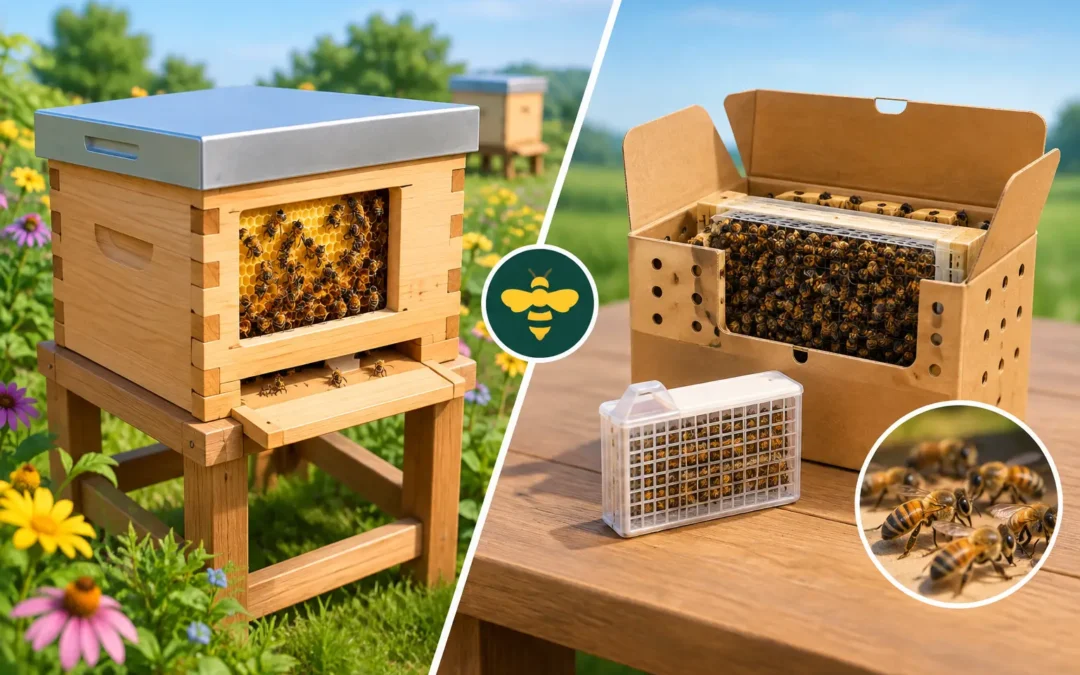
A new hive can look very different six weeks after installation depending on how it began. The choice between nucleus colonies versus package bees affects not only early honey production, but also queen acceptance, brood continuity, disease management, and the amount of hands-on support the colony needs through spring.
For beekeepers who value traceable stock and long-term colony performance, the question is not simply which option is cheaper. It is which start best fits the apiary, local nectar flow, management style, and breeding goals.
What arrives with each option
A package is a measured quantity of worker bees, usually supplied in a transport container with a separately caged queen. It normally contains no drawn comb, brood, pollen stores, or established nest structure. Once installed, the bees must accept the queen, draw comb, build a brood nest, and begin raising a new generation of workers.
A nucleus colony, often called a nuc, is a small functioning colony. It is supplied on several frames containing a laying queen, brood in different stages, workers, food reserves, and drawn comb. The colony already has its social organization and brood cycle in place. After transfer to a full hive, it can continue developing with relatively little interruption.
That difference is the foundation of the decision. A package is a fresh beginning. A nuc is an already functioning biological unit.
Why nucleus colonies usually build faster
A nucleus colony has a major early-season advantage because it includes sealed brood and young bees already on the way. Within days, new workers begin emerging, supporting brood care, comb building, and foraging. The queen is also established and proven to be laying before the colony reaches the buyer.
This matters most where the spring nectar flow is short or arrives early. A nuc installed at the right time can expand quickly enough to use an early flow, provided it receives adequate space and its food stores are monitored. In a strong season, it may develop into a production colony sooner than a package.
A package must first invest heavily in wax production. Drawing comb requires nectar, favorable weather, and a large energy input from the bees. If cold, rain, or a nectar shortage follows installation, progress can slow considerably. The colony may need syrup feeding for longer, and its first meaningful population increase comes only after the new queen’s brood emerges.
This does not mean every nuc will outperform every package. A weak nuc, a failing queen, old comb, or poor transport conditions can erase the expected advantage. The quality of the supplier and the condition of the bees matter more than the label alone.
Queen quality is easier to assess in a nuc
With a nuc, the queen has demonstrated that she can mate, lay, and maintain a brood pattern. A careful beekeeper can inspect the colony before or soon after purchase and assess brood quality, temperament, food stores, and signs of disease.
Package queens may also be excellent, particularly when produced by a responsible breeder. However, the queen must still be accepted by a group of unrelated workers after transport. Acceptance can be affected by stress, shipping time, temperature, and handling. A package buyer should be prepared to check that the queen has been released and is laying within the expected period.
For beekeepers seeking selected Carniolan genetics, queen origin deserves special attention. Calm behavior, hygienic behavior, wintering ability, and spring development are traits that become valuable over several seasons, not just during installation week.
Health and biosecurity require different questions
Packages are sometimes described as the healthier option because they arrive without old comb and brood. That can reduce the chance of bringing in some brood-comb associated problems. Starting on fresh foundation also gives the beekeeper control over comb renewal from day one.
But a package is not automatically disease-free. Varroa mites can travel on adult bees, viruses may be present without obvious symptoms, and stressed bees may struggle after installation. The new colony still needs a proper varroa monitoring plan and regular inspections.
A nuc brings brood, comb, and food stores, which makes supplier standards especially important. Ask how colonies are inspected, how comb is renewed, what disease monitoring is practiced, and whether the queen and colony history can be traced. In organic beekeeping, management records and approved treatment practices are part of responsible purchasing, not an administrative detail.
A well-managed nuc from a transparent apiary can be a sound choice. An unknown nuc with dark, old comb and no clear health history is a risk, even if it appears strong on collection day.
Comparing costs beyond the purchase price
Packages generally cost less at the initial purchase. For a beekeeper expanding several hives at once, that lower entry price can be appealing. They can also be useful when a beekeeper wants to build colonies on new equipment and manage every stage of comb development.
The lower purchase price does not tell the whole story. Packages often require more syrup, closer queen checks, and more time before they can support themselves. They may also miss part of the main flow, reducing the chance of a harvest in their first season.
Nucs cost more because they include frames, brood, comb, stores, and an established queen. Yet they may reduce feeding needs and can save valuable spring weeks. For a small apiary, that stronger start can justify the difference, particularly where replacing a lost season would be more expensive than paying more for the colony.
When comparing offers, account for the number and type of frames included, whether the equipment must be returned, the queen’s breeding background, transport arrangements, and the supplier’s support if a problem is found at collection.
Nucleus colonies versus package bees for different beekeepers
A beginner often benefits from a nuc because it offers a clearer picture of normal colony life. There is brood to inspect, a working queen, food reserves, and a population that can recover more easily from small management mistakes. The beekeeper can concentrate on learning inspections, swarm prevention, and varroa monitoring rather than trying to establish a colony from its first day.
A package can suit an experienced beekeeper who has spare drawn comb, reliable feeding capacity, and the time to inspect closely during the first weeks. It can also be practical where packages are readily available and local regulations permit their movement.
For a beekeeper focused on organic and locally adapted stock, a locally produced nuc is often the more aligned option. It avoids unnecessary long-distance movement where possible and allows the buyer to see the colony’s condition and queen performance. Local adaptation does not guarantee success, but colonies selected under real conditions in a similar climate begin with an advantage.
Management after installation still decides the outcome
Whether the colony begins as a nuc or package, installation is only the first step. Both need a level hive, adequate ventilation, access to water, protection from starvation, and enough room as their population grows. A package usually needs feeding until it has drawn sufficient comb and can forage reliably. A nuc may also need feed during cold or nectar-poor weather, especially if it is expanding rapidly.
Do not assume a nuc can simply be left alone because it looks strong. Rapid spring development can lead to crowding and swarming if additional space is delayed. Likewise, do not judge a package too quickly. A slow first week may be normal after transport, while a lack of eggs or an irregular brood pattern later on calls for closer attention.
At MS Carnica Queens, colony selection is based on practical performance in the apiary, including temperament, spring development, hygiene instinct, productivity potential, and wintering strength. Those are the qualities worth seeking in any supplier, alongside clear records and careful colony health management.
The best choice is the one that gives your bees a realistic start in your local conditions and gives you enough time to manage them well. A healthy, traceable colony cared for attentively through its first spring is a far better investment than a bargain purchase that arrives with unanswered questions.