


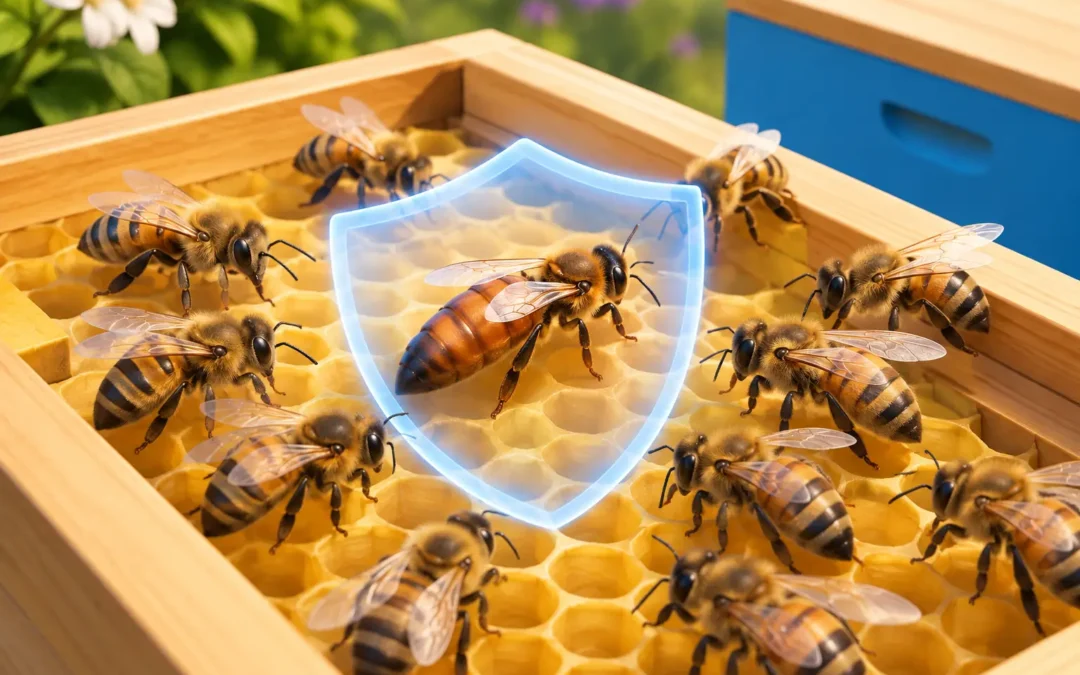
A valuable queen can be lost in minutes if a colony is not ready to receive her. Queen rejection prevention is therefore less about a single introduction trick and more about reading the colony correctly before the cage is opened. With naturally mated Carniolan queens, a calm and methodical introduction supports the gentle temperament and productive potential for which this bee is known.
Start With the Colony, Not the Queen
Most rejected queens are introduced into colonies that are queenright, unsettled, or too weak to manage change well. Before ordering or introducing a replacement queen, confirm the colony’s actual condition. Look for eggs and very young larvae, not only the presence or absence of a visible queen. A failing queen may be difficult to find, while her fresh brood confirms that she is still present.
If there are no eggs, inspect carefully for emergency queen cells. Workers can begin raising a replacement quickly, and even a small hidden queen cell can lead them to reject an introduced queen. Remove every queen cell you find, then inspect again several days later if timing allows. In a colony with a virgin queen, newly emerged queen, or an unmated queen, acceptance is especially uncertain. The workers may behave queenless while still holding strong loyalty to their own developing queen.
A colony that has been queenless for too long can also be difficult. Laying workers may develop, and their pheromones can make normal queen acceptance unreliable. Signs include multiple eggs per cell, eggs placed on cell walls, and a scattered pattern of drone brood in worker cells. Requeening such a colony often requires first combining it with a stable queenright colony or creating a controlled nuc situation.
Queen Rejection Prevention Begins With Timing
Weather, nectar flow, and colony disturbance all influence acceptance. Bees usually accept a new queen more readily when conditions are stable and foraging is possible. Avoid introducing her immediately before a cold spell, during prolonged rain, or when the colony has been heavily disturbed by moving, feeding changes, or disease treatment.
A modest nectar flow can help because workers are occupied and less defensive. During a severe dearth, however, robbing pressure and agitation can make introductions harder. Feeding light syrup may be appropriate where it is compatible with local conditions and organic management requirements, but it should not be used to mask a colony problem. Good acceptance begins with a healthy, adequately populated colony with enough food reserves.
For shipped queens, timing matters from the moment the package arrives. Bring the cage into a quiet, shaded place and check that the queen is alive and attended. Do not leave her in direct sun, a hot vehicle, or a cold draft. If an immediate introduction is not possible, keep the cage in a stable indoor environment and follow the breeder’s handling guidance. Delays should be short, especially in hot weather.
Use a Slow, Protected Introduction
Direct release is fast, but it gives workers little time to become accustomed to the queen’s pheromones. It can work in carefully selected splits, but it is not the best default method for a valuable mated queen. A cage introduction is more dependable because it creates a period of gradual contact.
Place the queen cage between brood frames, ideally in the warm center of the brood nest where nurse bees are present. The screen should be accessible to workers, and the cage must not be squeezed tightly between frames. Avoid placing it at the edge of the box or above the cluster, where fewer bees will attend her.
Before opening the candy end, observe the workers on the cage. Bees that feed the queen calmly and cling to the screen with relaxed bodies are encouraging signs. Bees that bite at the cage, curl their abdomens, or form a tight aggressive ball around it are signaling rejection. If the reaction is hostile, do not release the queen. Keep her protected, inspect again for hidden queen cells or a resident queen, and give the colony more time.
With a candy plug, workers normally release the queen gradually over several days. This delay is useful, not inconvenient. It allows her scent to spread through the cluster and gives workers time to adjust. Check that the candy passage is not blocked and that attendants can reach the queen, but resist the urge to release her early simply because she appears active.
Avoid Smoke and Repeated Inspections
Use little or no smoke around the cage. Heavy smoke disrupts normal behavior and makes it harder to judge whether workers are accepting the queen. A calm, efficient inspection is better than a long examination with frames exposed.
Once the cage is in place, leave the colony undisturbed for several days unless there is a clear reason to intervene. Repeated opening chills brood, increases defensive behavior, and can interrupt the acceptance process. On the follow-up inspection, first look for the queen and then look for eggs. Fresh, well-centered eggs are the most useful confirmation that she has begun laying.
Give Small Colonies Extra Support
Nucs and late-season colonies can accept queens well, but their smaller populations leave less margin for error. They need enough young bees to care for brood and enough stores to remain stable. A weak colony with few nurse bees may not build quickly even after accepting a high-quality queen.
If the colony is truly small, reduce the space it must defend and heat. Keeping it in an appropriately sized box helps the bees maintain brood temperature and remain organized around the queen. Protect small units from robbing, especially when feeding. A narrow entrance and careful handling are often more useful than frequent intervention.
Carniolan bees are known for strong spring development when forage and colony conditions support it. That strength should not be forced by overexpanding a newly requeened colony too soon. Let the queen establish a consistent brood pattern before adding excessive empty space or splitting the colony again.
Match the Queen to a Sensible Requeening Plan
A queen introduction cannot correct every underlying issue. Varroa pressure, brood disease, starvation, chronic robbing, pesticide exposure, and poor comb quality can all limit the colony after acceptance. Evaluate the whole unit before deciding that the queen alone is responsible for its performance.
This is particularly relevant in organic beekeeping, where prevention, colony selection, hygiene, forage access, and careful seasonal management are central to long-term health. Requeening with selected Carniolan genetics can improve temperament, brood continuity, and vitality, but it works best alongside responsible husbandry.
For breeder-quality queens, keep clear records. Note the date of introduction, colony strength, weather, queen-cell removal, release method, and the first date eggs are seen. These simple observations reveal patterns over time. If several introductions fail, the records may point to a recurring issue such as inadequate queenlessness, poor timing, or a particular apiary’s robbing pressure.
When a Second Attempt Is the Better Choice
If a queen is killed or disappears, do not rush to introduce another queen without finding the cause. Inspect for queen cells, fresh eggs, and unusual worker behavior. A replacement queen deserves a colony that is prepared to receive her, not one still reacting to the previous introduction.
When uncertainty remains, a small queenright nuc can be the safest place to establish a queen before using her to requeen a larger colony. This adds a step, but it can reduce risk when a production colony is aggressive, disorganized, or has a questionable queen history.
Careful queen rejection prevention protects more than an individual queen. It protects the season ahead: orderly brood rearing, calm inspections, dependable winter preparation, and the opportunity for a colony to show what well-selected Carniolan genetics can do in a healthy apiary.