


A well-bred queen can only show her value if the colony accepts her. Knowing how to introduce a carniolan queen calmly and at the right time protects the investment in selected genetics and, just as importantly, avoids unnecessary stress for the bees. Carniolan colonies are often notably gentle and responsive, but every queen introduction depends on the condition of the receiving colony.
The safest approach is usually a slow introduction in a cage with candy. It gives worker bees time to become familiar with the new queen’s pheromones before they can reach her. Rushing the process by releasing her immediately may work occasionally, but it is a risk that is rarely justified.
Prepare the Receiving Colony First
Queen acceptance begins before the new queen is placed in the hive. A colony must be genuinely queenless, with no queen cells and no virgin queen present. If a colony believes it has a queen, it may kill an introduced queen regardless of her quality.
Find and remove the old queen if the colony is being requeened. Do this carefully, especially in a strong hive where the queen can be difficult to locate. Once she is removed, inspect the brood frames for queen cells. Destroy all open and capped queen cells, including small cells built along the lower edge of comb.
For most colonies, leaving them queenless for several hours or overnight is enough. This short interval creates a clear need for a queen without allowing the colony time to produce many emergency cells. In a practical apiary, introducing the new queen on the same day or the following day is a sensible balance.
A weak nucleus colony, a newly made split, and a full production colony do not always behave the same way. A calm, queenless nucleus with young bees often accepts a mated queen very readily. A large colony with many older foragers, or a colony that has been queenless for an extended period, needs a more thorough inspection and a slower approach.
How to Introduce a Carniolan Queen in a Cage
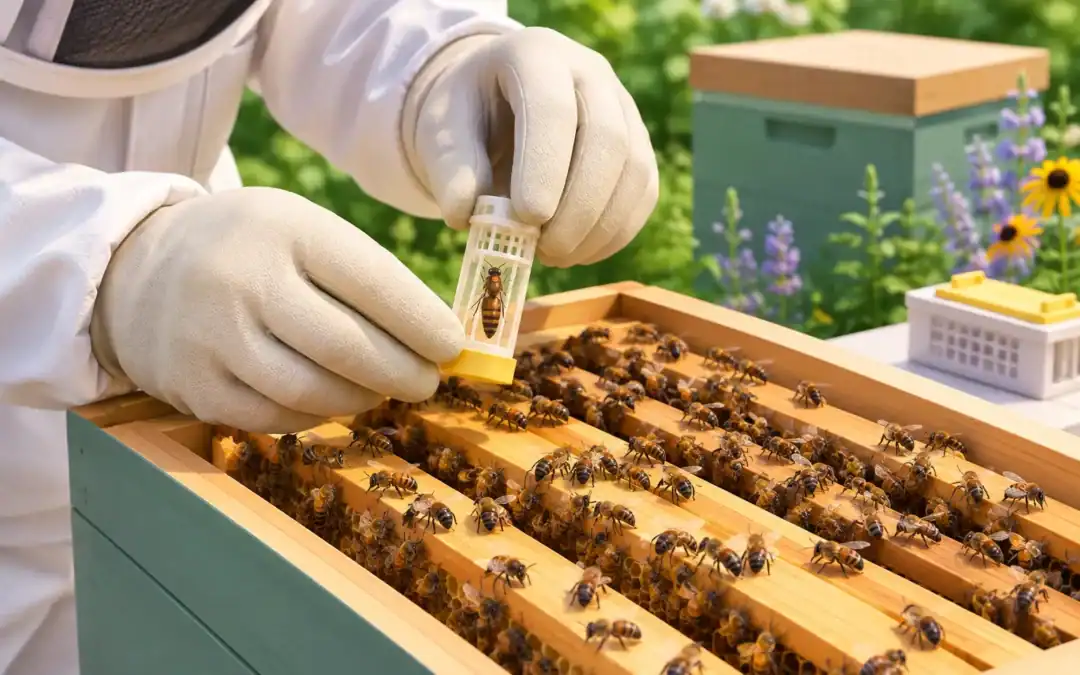
Keep the queen cage out of direct sun, wind, and cold while working. A naturally mated Carniolan queen is normally supplied in a transport cage with attendant workers and a candy plug. Check that the queen is alive and moving normally before placing the cage in the colony.
Open the hive with as little smoke as possible. Excessive smoke can disturb the colony and makes it harder to read the workers’ behavior around the cage. Place the cage between two frames in the center of the brood nest, ideally where young nurse bees are present. The screen should face the space between frames so workers can feed and contact the queen.
Make sure the candy end is accessible. Do not press the cage tightly against comb or leave it where the candy plug can become blocked by wax. In cool weather, position it close to the brood cluster rather than at the outer edge of the hive.
The cage should remain in place long enough for bees to eat through the candy and release the queen themselves. This commonly takes two to five days, depending on temperature, colony strength, and the type of cage. That gradual release is the main protection against rejection.
Before closing the hive, observe the workers on the cage. Bees calmly walking over the screen, feeding attendants, or extending their tongues toward the queen are encouraging signs. Bees gripping the cage, biting the wire, raising their abdomens, or forming a tight aggressive ball around it indicate poor acceptance. If the response is hostile, do not release the queen. Close the colony and reassess it after another day or two, paying particular attention to missed queen cells or a hidden virgin queen.
Check the Colony Without Disturbing It Too Much
After three to five days, inspect the cage. If the queen has been released and the colony is calm, close the hive and give her time to settle. A newly introduced queen does not always begin laying immediately. Transport, a change of colony, poor weather, and a shortage of nectar or stored food can all delay egg laying.
Check again about seven to 10 days after release. Look for eggs, then for a compact pattern of young larvae. A good laying pattern develops over time, so avoid judging a queen too early from one small patch of brood. The first useful question is whether she is present and laying, not whether the colony has already reached full production.
If she is still in the cage but workers are calm, you may leave the cage for another day or carefully release her into the brood area. Manual release is best reserved for clear acceptance, when workers show no aggression and there are no queen cells. If there is any doubt, use more time rather than force.
Keep disturbance low during this period. Repeated inspections can interrupt queen acceptance and make a recently introduced queen more likely to run, fly, or be balled by workers. A colony needs quiet conditions to reorganize around its new queen.
Common Reasons a New Queen Is Rejected
Most failed introductions can be traced to one of a few causes. The colony may have retained a queen cell or virgin queen, the original queen may not actually have been removed, or workers may have begun laying after a prolonged queenless period. Laying-worker colonies are particularly difficult to requeen because they no longer respond normally to queen pheromone.
Poor timing can also matter. Introducing a queen during a nectar dearth, cold spell, heavy robbing pressure, or when the colony has little food increases stress. Feed if necessary and reduce entrances when robbing is active. A steady colony with adequate stores is more prepared to accept a queen than a hungry, defensive one.
Avoid combining bees from several colonies immediately before introduction unless there is a clear management reason. Mixed odors and unsettled workers can complicate acceptance. If the colony is unusually aggressive or has been queenless for weeks, a small temporary nucleus with young bees may offer a safer place for the queen to begin laying before she is used to requeen a larger unit.
Timing Matters in Carniolan Beekeeping
Carniolan bees are valued for rapid spring development, wintering ability, calm temperament, and efficient use of changing forage conditions. To benefit from these traits, requeen early enough for the colony to build a healthy workforce before the main honey flow in your area.
Spring and early summer are often favorable because colonies contain young bees and naturally have brood to support. Later introductions can also succeed, especially when replacing an aging or failing queen before winter preparation. In late season, however, the new queen needs enough time to establish brood and produce well-fed winter bees.
For certified organic operations, queen replacement should also fit the records and management rules of the certification system. Keep clear notes on the date of introduction, the colony involved, the queen’s origin, and the first confirmed brood. Good records support traceability and help identify which breeder lines perform best in your own forage conditions.
A quiet cage introduction, careful checks for queen cells, and patience after release give a selected Carniolan queen the best possible start. Once her first brood emerges, the character of her colony will become clearer – not in a single inspection, but through steady observation across the season.