


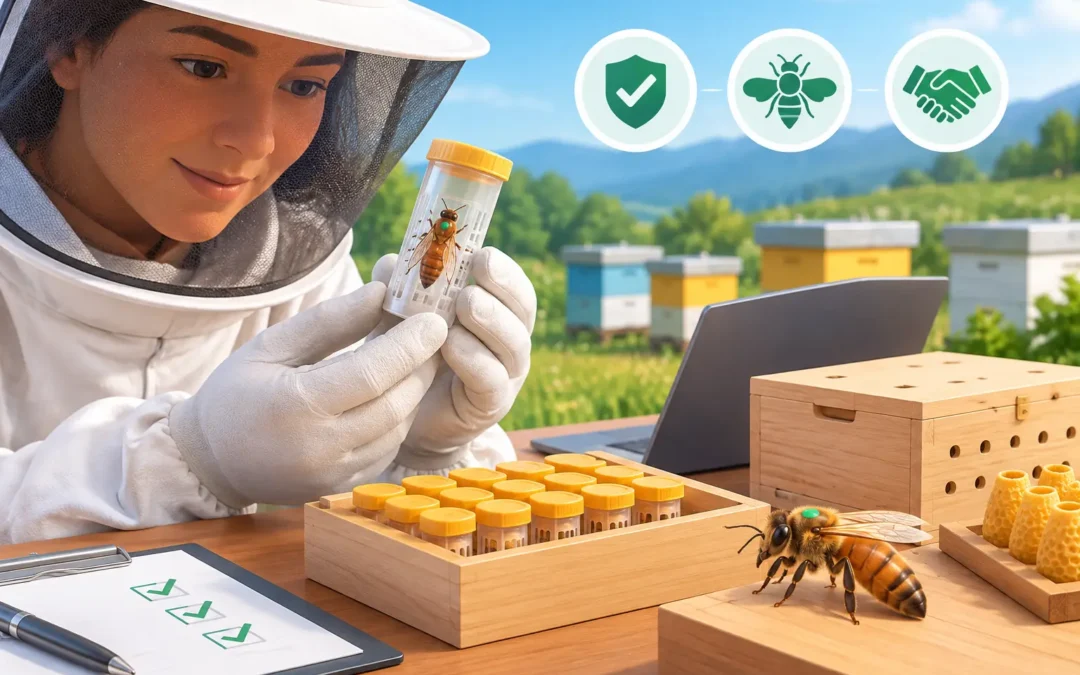
A queen purchase can shape an apiary for far longer than one season. When comparing queen suppliers, beekeepers are not simply choosing a marked insect for a replacement colony. They are choosing breeding decisions, management standards, disease awareness, and the level of care behind the queen’s first days in a new hive.
For beekeepers who value the Carniolan honey bee, authenticity matters especially. A true Slovenian Carniolan queen should come from a breeding program that respects the qualities for which Apis mellifera carnica is known: calm behavior, rapid spring development, efficient use of forage, reliable wintering, and a strong instinct for colony hygiene.
What Reliable Queen Suppliers Can Show You
A trustworthy supplier should be able to explain where their queens come from and how their breeder colonies are selected. Broad claims about “excellent genetics” are not enough. Good genetics are built through repeated observation of colonies under real apiary conditions, not through a single favorable inspection.
Ask how colonies are evaluated across the season. Productive breeder selection considers more than honey yield. A colony may produce well during one strong nectar flow yet show poor temperament, excessive swarming, weak winter survival, or limited hygienic behavior. These traits affect the practical value of a queen in your own apiary.
Reliable queen suppliers should also be open about whether queens are naturally mated or instrumentally inseminated, the mating environment, the expected delivery period, and the steps used to prepare queens for transport. Neither mating method is automatically better in every situation. Naturally mated queens can offer practical, well-adapted stock when they are raised and mated within a carefully managed breeding environment. The essential point is clarity about the method and the breeding goal.
Traceability Is More Than a Certificate
Traceability gives a beekeeper a meaningful connection between a purchased queen and the operation that produced her. It includes the breeder’s identity, the queen’s year or marking color, the production location, and records that support breeding and health decisions.
For organic beekeepers, traceability also supports compliance with their own certification requirements. Organic standards can differ in detail between certification bodies and countries, so it is wise to confirm what documents your inspector needs before ordering. A supplier’s organic certification is valuable, but it does not remove the buyer’s responsibility to maintain records within their own operation.
A transparent breeder will not present certification as a shortcut around careful beekeeping. Organic production depends on daily husbandry: suitable hive locations, considered feeding practices where permitted, responsible Varroa management, clean wax policy, and close attention to colony condition.
How Carniolan Queens Should Be Selected
The best selection happens over time. Breeder colonies need to prove themselves through spring growth, the main production season, late-summer preparation, and winter. This is particularly relevant in regions with variable weather, short nectar windows, or long winters.
At MS Carnica Queens, breeder colonies are assessed in working apiaries in the Slovenian countryside, where performance is observed under real production conditions. The aim is not to promote a single trait at the expense of all others. A very fast-growing colony is not automatically a good breeder choice if it becomes difficult to handle or requires constant swarm control.
A balanced evaluation usually considers the following connected qualities:
- Calm temperament during inspections, allowing practical work with less disturbance to bees and beekeeper.
- Spring development that supports timely colony buildup without encouraging reckless expansion.
- Honey production potential measured alongside colony strength and local forage conditions.
- Hygienic behavior, which contributes to the colony’s ability to recognize and remove unhealthy brood.
- Wintering ability, including prudent use of stores and a healthy population entering spring.
- General vitality, brood pattern, and consistency across changing weather and nectar conditions.
No queen can guarantee identical results in every location. Weather, forage, Varroa pressure, colony management, and the quality of local drones all influence performance. Still, selection for balanced traits gives a colony a stronger foundation than selection based on appearance or a one-time yield record.
Why Origin Matters With Carniolan Bees
Carniolan bees have deep roots in Slovenia, where the subspecies is part of beekeeping heritage as well as modern breeding work. Queens raised in this environment are connected to a long tradition of selecting bees suited to continental conditions, changing seasons, and diverse forage.
That does not mean a Slovenian queen will behave exactly the same in every European apiary. Coastal climates, hot lowlands, mountain areas, and intensive agricultural landscapes each place different demands on colonies. It does mean that origin should be documented honestly rather than used as a vague marketing label.
When seeking authentic Carniolan queens, ask whether the supplier breeds in the native area, maintains records of breeder colonies, and can explain how they protect the integrity of their breeding stock. Price alone rarely answers these questions.
Look Beyond the Queen at the Whole Apiary
The way a breeder manages colonies tells you much about the queens they produce. Well-kept apiaries have orderly handling routines, regular colony checks, and a clear approach to replacing weak or unsuitable breeder candidates. They do not rely on keeping every colony alive at any cost.
Health management deserves special attention. Responsible beekeepers monitor Varroa mites and use treatment strategies appropriate to their production system and local regulations. A supplier should never imply that genetics make mite management unnecessary. Hygienic behavior and vitality are valuable, but Varroa control remains a central part of colony care.
The same principle applies to nutrition. Strong colonies are developed through access to suitable forage, adequate stores, and timely management. Feeding can be necessary in difficult periods, but it should support colony welfare rather than disguise poor planning or weak stock.
Questions to Ask Before You Order
Before placing an order, contact the breeder early, especially if you need queens for spring splits, nucleus colonies, or planned requeening. Good queens are seasonal products, and careful suppliers work within the pace of colony development rather than promising unlimited availability.
Ask when queens are expected to be available, how they are shipped, and what you should prepare before they arrive. Clarify whether the queen is marked, whether attendants are included, and what guidance is offered if acceptance is delayed. A queen may be perfectly healthy when dispatched but still be rejected by a stressed, queenless, or poorly prepared recipient colony.
It is also useful to discuss your goals. A hobby beekeeper seeking calm colonies near homes may prioritize different traits than a commercial operator managing migratory production yards. An organic beekeeper may need specific documentation. A serious supplier should help you select stock that fits your conditions rather than pushing a one-size-fits-all answer.
Give a New Queen a Fair Start
Even exceptional genetics need proper introduction. Confirm that the colony is truly queenless, remove any queen cells, and follow the supplier’s introduction instructions carefully. Avoid repeated disturbance while the bees are becoming familiar with the queen’s pheromones.
Check acceptance at the appropriate time, then assess brood only after the queen has had time to begin laying. A compact brood pattern and calm colony behavior are encouraging signs, but evaluate performance across the season. Keep notes on temperament, brood development, swarming tendency, winter stores, and health. Those records will help you make better requeening choices year after year.
The right supplier is a long-term partner in better beekeeping, not merely a source for an urgent replacement queen. Choose breeders who can show their work, respect the bees’ natural season, and stand behind genetics shaped by careful observation in the apiary.