


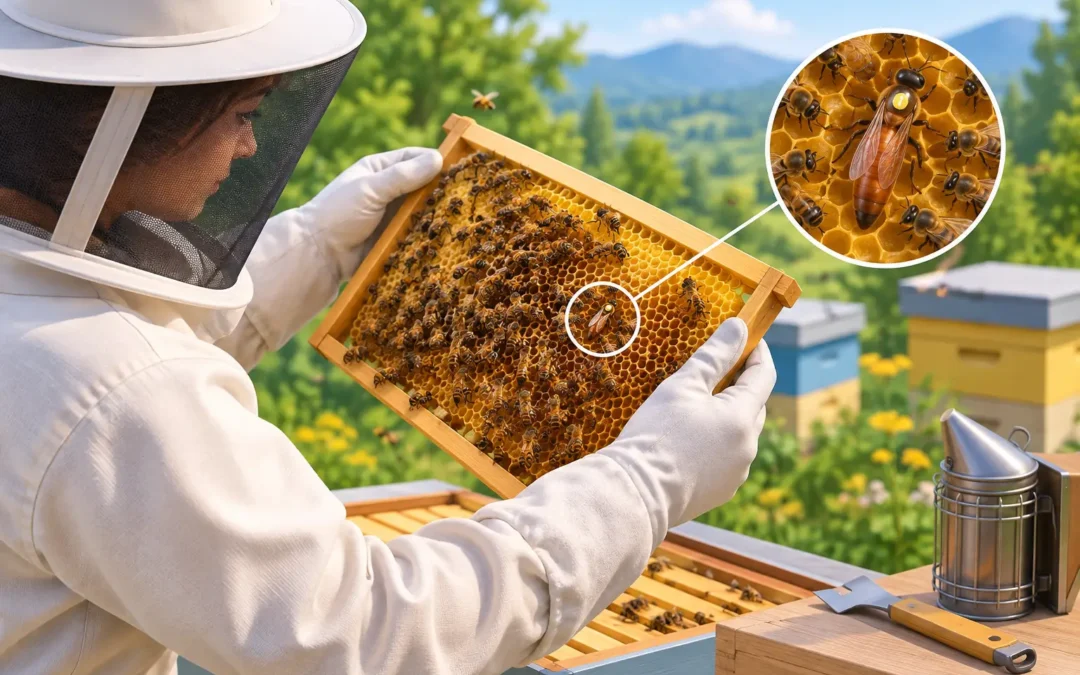
A queen can look large, well marked, and active on the comb while the colony beneath her tells a different story. The most dependable way to learn how to assess queen quality is not to judge the queen by appearance alone, but to evaluate the colony’s performance across the season. A good queen leaves a clear record in brood, bees, stores, behavior, and winter survival.
For Carniolan bees, this wider view matters especially. Apis mellifera carnica is valued for calm handling, efficient use of stores, and rapid spring development. Those strengths should be visible in a colony that is well managed and suited to its local forage conditions. No queen can compensate for poor nutrition, disease pressure, repeated disturbance, or inadequate space, so assess her in context.
Start With a Suitable Inspection Day
Choose a warm, calm day when foragers are flying. Avoid judging a colony after a long cold spell, during a nectar dearth, immediately after transport, or when robbing pressure is high. These conditions can make even a normally gentle, productive colony appear unsettled.
Use a consistent approach. Compare colonies of similar size, housed in similar equipment, and managed in the same apiary. A queen should be assessed more than once. One inspection is a useful snapshot; several inspections across spring, the main flow, late summer, and preparation for winter show the true quality of her offspring.
How to Assess Queen Quality Through Brood
Brood is usually the clearest early indicator. A strong queen lays a compact pattern of worker brood, with eggs and larvae distributed in a way that reflects the available comb and colony space. In a healthy expanding colony, you should see a good proportion of cells occupied by brood at different stages: eggs, young larvae, older larvae, and capped brood.
A few empty cells are normal. Workers may leave cells open because of pollen placement, damaged comb, emerging bees, or localized brood removal. Do not reject a queen simply because the pattern is not perfectly solid. Look instead for a repeated pattern of scattered brood with many empty cells, especially when the colony has adequate pollen, food, room, and a young queen.
Check for eggs and worker brood
Fresh eggs confirm that a laying queen was present very recently. Worker brood should be relatively even and flat-capped. Numerous raised, bullet-shaped drone cells scattered across worker comb can indicate a failing queen that is laying unfertilized eggs, or a colony that has become queenless and developed laying workers.
The age of the queen changes what is reasonable to expect. A newly mated queen may need time to establish a full laying pattern. An older queen may slow naturally toward the end of the season. What matters is whether her laying is appropriate for the colony’s needs and the time of year.
Read queen cells carefully
Queen cells deserve attention, but they are not automatically proof of poor queen quality. Swarm cells often appear along the lower edges of frames when a strong colony is crowded or has reached a peak population. Supersedure cells may appear on the face of the comb when workers are preparing to replace an aging or injured queen.
Repeated supersedure in otherwise well-managed colonies can suggest that the queen is not meeting the workers’ needs. However, rough handling, accidental queen injury, limited space, or a disrupted mating period can also lead to replacement. The cause matters before you make a breeding or requeening decision.
Observe the Bees, Not Just the Queen
A queen’s value is expressed through her daughters. When the hive is opened with normal care, a well-bred Carniolan colony should generally remain workable on the comb. Bees may respond to weather, smoke, nectar conditions, or predators, but persistent nervousness, running, excessive stinging, and following behavior should be recorded.
Temperament is not a minor preference. Calm colonies are easier to inspect thoroughly, easier to manage in populated areas, and less stressful for both beekeeper and bees. Still, judge behavior fairly. A colony disturbed during a thunderstorm, dearth, or cold wind does not offer a reliable temperament test.
Also watch how the bees cover their brood. A colony with good queen quality and sufficient resources should maintain a population that protects brood effectively. Brood left poorly covered during cool weather may point to a weak population, though the underlying issue could be nutrition, disease, or an overly large brood nest rather than the queen alone.
Measure Development and Productivity Over Time
Spring development is one of the most useful traits in Carniolan breeding. A quality queen should produce a colony that builds decisively when pollen and nectar become available, without exhausting its winter stores before the spring flow. Fast growth is valuable, but it must be balanced with sensible store use and manageable swarming tendency.
Record the number of brood frames, frames covered with bees, and honey supers added at regular intervals. These simple notes make comparison far more reliable than memory. A colony that consistently reaches production strength at the right time, gathers well under local conditions, and maintains its population after the main flow is often headed by a queen worth retaining.
Honey yield is meaningful, but it is not the only measure. A colony may produce less in a poor forage location yet still show excellent brood quality, calmness, hygiene, and wintering ability. Conversely, a highly productive colony with poor temperament, constant swarming, or weak survival may not be suitable breeding stock.
Look for Hygiene and Colony Vitality
Hygienic behavior helps colonies recognize and remove unhealthy brood. In a practical apiary inspection, look for clean brood combs, healthy-looking larvae, and workers that maintain an orderly nest. If you conduct a standardized hygienic behavior test, use the same method and timing across all colonies so the results can be compared fairly.
A single hygiene result should not stand alone. Strong breeder selection considers hygiene alongside brood pattern, gentleness, productivity, resistance traits, and winter performance. This is particularly relevant in organic beekeeping, where careful husbandry, good forage, and selection of naturally vigorous colonies are central to long-term health.
Watch for signs that require investigation rather than quick judgment: sunken or perforated cappings, unusual larval color, foul odors, deformed bees, or crawling bees at the entrance. These can point to disease or parasite problems that affect colony performance regardless of queen quality. Diagnose and address the colony condition before deciding whether the queen is at fault.
Wintering Reveals Long-Term Quality
A queen should be evaluated through winter, not only during the honey flow. Good wintering is one of the most valuable outcomes of sound genetics and careful management. In spring, assess whether the colony has survived with an appropriate population, sufficient remaining stores, a healthy brood nest, and a timely return to growth.
Carniolan colonies are known for wintering efficiently when they are properly prepared. A very large cluster in fall is not automatically better if it consumes excessive stores. The more useful question is whether the colony comes through winter balanced, healthy, and ready to respond to spring conditions.
Keep Records Before Selecting or Replacing
Breeder decisions should be based on written observations. Mark the queen with the appropriate annual color if your local practice uses marking, then keep a record for each colony. Note queen origin and age, brood quality, temperament, swarm preparations, population growth, honey production, health observations, treatment history where applicable, and winter outcome.
This record is especially useful when selecting daughters from colonies that have performed well under your own conditions. A queen that thrives in the Slovenian countryside may have excellent genetic potential, but her daughters must still be assessed against the forage, weather, management system, and disease pressure of their new apiary.
When choosing naturally mated Carniolan queens, traceable origin and honest breeder-colony evaluation give the beekeeper a better starting point. At MS Carnica Queens, breeder colonies are assessed under real production conditions because lasting quality is shown in the work of the colony, not in a single inspection.
A good queen is not defined by one perfect frame of brood. Give her colony room to show its character, keep clear records, and select for the balanced traits that will keep bees healthy, productive, and manageable season after season.